

close
Choose Your Site
Global
Social Media
Views: 0 Author: Site Editor Publish Time: 2026-10-20 Origin: Site


Continuous industrial operations are notoriously unforgiving. In these relentless 24/7 environments, unscheduled downtime equates to immediate and severe revenue loss. Drive systems face constant operational strain every single hour of the day. They must endure extreme thermal buildup, demanding torque fluctuations, and massive continuous energy consumption. Equipment failure simply is not an option when production schedules run around the clock. Facility operators need robust components built for absolute mechanical reliability. This is exactly where the Helical Gear Motor emerges as the definitive engineering standard. It brilliantly bridges the critical gap between high mechanical efficiency and long-term industrial durability. By utilizing precisely angled gears, these drive units manage heavy shock loads while running quietly and coolly. You will learn how they dominate heavy-duty applications and reduce energy waste. We will also explore specific evaluation criteria to help you select the optimal drive system for your continuous production lines.
Helical gear motors deliver up to 98% efficiency per stage, significantly reducing energy costs in continuous 24/7 operations compared to worm gear alternatives.
Their gradual tooth-meshing design minimizes vibration and wear, directly extending the mean time between failures (MTBF) in high-stress applications.
Proper specification requires matching the motor’s Service Factor (SF) to the exact load profile and environmental conditions of the continuous equipment.
Drive systems in 24/7 facilities face intense success criteria. They must maintain thermal stability under constant internal friction. They require highly predictable maintenance schedules to avoid surprise breakdowns. Energy efficiency is also paramount when motors run continuously for 8,760 hours a year. If a gearbox runs too hot, thermal equilibrium is compromised. Lubricants break down rapidly, leading directly to metal-on-metal wear. You cannot rely on fragile mechanical systems when strict production quotas demand non-stop output.
The cost of inefficiency is staggering. Parasitic power losses compound quickly over thousands of hours of annual continuous operation. A poorly designed drive might lose 15% to 20% of its input power to heat and friction. When you multiply that energy loss across dozens of motors in a massive plant, utility bills skyrocket. Every single watt lost to mechanical sliding friction eats directly into facility profit margins.
Furthermore, we must address aggressive mechanical load dynamics. Continuous equipment rarely operates in a perfect, steady state. Drive systems endure brutal shock loads during heavy startups or unexpected material jams. They must quickly adapt to variable speeds driven by minor process fluctuations. They also face intense radial and axial forces from external belts, heavy pulleys, and long agitator shafts. Only a robustly engineered Helical Gear Motor can consistently absorb these destructive forces without catastrophic mechanical failure.
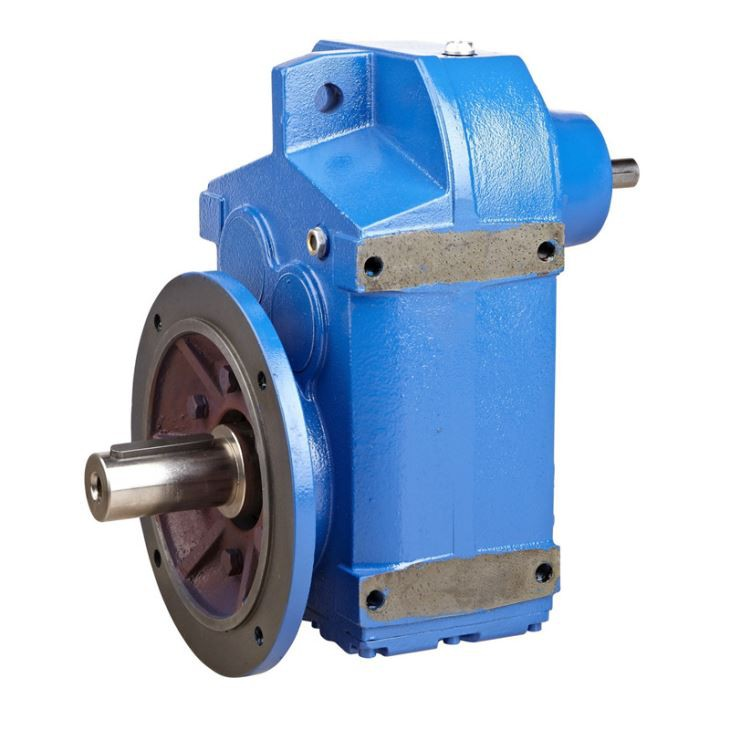
The mechanical superiority of helical gears stems directly from their fundamental motion. We see a smooth rolling action rather than aggressive sliding friction. Worm gears rely heavily on sliding contact, which inherently generates excessive heat and drastically lowers system efficiency. Helical gears typically achieve 95% to 98% efficiency per reduction stage. They run significantly cooler under heavy loads. Lower operating temperatures preserve vital lubricant integrity and protect internal rubber seals. You save money on raw power consumption and simultaneously prolong the lifespan of the entire unit.
Helical gears feature teeth cut at very specific angles. This angled design allows multiple teeth to mesh simultaneously during rotation. As gears spin, the contact point starts at one end of the tooth and smoothly sweeps across its entire face. This gradual load transfer distributes mechanical stress incredibly well. It prevents the sudden, jarring impact commonly seen in older straight-cut spur gears. Consequently, it minimizes damaging vibration and significantly reduces acoustic noise output. In enclosed, echo-heavy manufacturing facilities, this acoustic noise reduction greatly improves worker safety and ambient comfort.
Space is often highly restricted on crowded factory floors. Plant engineers constantly need massive mechanical power from highly compact footprints. A Helical Gear Motor offers an exceptionally high torque-to-footprint ratio. You do not have to sacrifice continuous power delivery to fit a drive into a tight machinery space. They deliver concentrated rotational force exactly where you need it most. High power density means you can easily upgrade equipment throughput without completely redesigning the surrounding conveyor frames or mixer chassis.
Different heavy industries push drive systems to their absolute limits. We see consistent patterns in how these harsh environments demand extreme mechanical reliability.
Mining and bulk logistics operations rely entirely on massive overland conveyor networks. These demanding applications need tremendous starting torque to overcome heavy, static loads. They must handle unpredictable, uneven weight distribution continuously as raw materials dump onto the moving belts. Reliability is simply non-negotiable over miles of continuous belting. Inline and bevel-helical configurations excel here. They provide the precise torque multiplication necessary to move tons of crushed rock or heavy freight. They also fit neatly within very tight mounting envelopes alongside the primary conveyor frames.
Chemical mixers and industrial plastic extruders operate under immense internal pressure. They demand unwavering speed control to ensure chemical product uniformity. They also generate severe axial thrust loads during continuous material pushing and deep mixing. If a drive shaft deflects even slightly, the entire batch is ruined. The distinct helical advantage here is structural integration. Manufacturers easily pair them with heavy-duty thrust bearings. They offer highly precise gear ratios to maintain consistent, high-quality material output. The robust cast-iron housing absorbs heavy thrust forces effortlessly.
Municipal wastewater treatment plants move millions of gallons of dense, abrasive sludge daily. Heavy pumping requires continuous low-speed, high-torque operation. The working environment is notoriously harsh, damp, and highly corrosive. Standard commercial motors corrode and fail remarkably quickly here. Helical units provide superior thermal dissipation even at very low operating speeds. They are highly compatible with severe-duty washdown enclosures. When fitted with specialized labyrinth seals, they block moisture and chemical contaminants perfectly.
Industrial Applications and Drive Demands Summary
Industry Sector | Equipment Type | Primary Operational Demand | Helical Design Advantage |
|---|---|---|---|
Mining & Logistics | Overland Conveyors | High starting torque, uneven heavy loads | High torque density, slim inline fit |
Plastics & Chemicals | Extruders & Mixers | Axial thrust absorption, precise speed control | Heavy-duty thrust bearing integration |
Wastewater Treatment | High-Volume Pumps | Low-speed torque, severe corrosion resistance | Thermal efficiency, advanced washdown sealing |
Choosing the right industrial equipment requires rigorous operational evaluation. You cannot guess when specifying drives for non-stop facility operations.
The Service Factor acts as your primary mechanical safety margin. It represents the motor's actual ability to handle occasional severe overloads. For continuous operations, a minimum Service Factor of 1.5 to 2.0 is mandatory. If your industrial process involves frequent, violent shock loads, you must aim even higher. A properly sized Service Factor ensures the internal gears do not shatter instantly when a crusher jams. It permanently protects your hardware investment against unpredictable operational power spikes.
You must evaluate physical mounting trade-offs carefully. Machinery space constraints and driven shaft orientation dictate your ultimate choice.
Inline Helical: Best suited for straight power transmission where overall unit length is not physically restricted.
Parallel Shaft: Ideal for tight machinery spaces requiring high torque, keeping the drive motor perfectly parallel to the driven load.
Helical-Bevel: Perfect for right-angle mounting configurations, offering much higher mechanical efficiency than traditional right-angle worm gears.
Always pair industrial helical gearboxes with premium efficiency electric motors. Look strictly for IE3 or IE4 efficiency classifications. The gearbox itself is already highly efficient. When you combine it directly with an IE4 motor, you maximize long-term financial returns. The massive energy savings easily justify the slightly higher initial purchase price over a continuous five-year production run.
Continuous operational cycles destroy cheap mineral oil quickly. Fully synthetic lubricants are an absolute requirement for modern 24/7 operations. They resist thermal breakdown beautifully and maintain ideal viscosity under extreme pressure. Furthermore, you must specify premium double-lip seals. These specialized rubber seals prevent lubricant leakage while simultaneously blocking environmental dust and water. Premium sealing directly extends your routine maintenance intervals significantly.
Even the finest mechanical components fail if installed poorly. You must mitigate installation and daily operational risks proactively to ensure survival.
Improper shaft alignment is a silent, rapid killer of industrial drives. You must warn your installation teams about strict mechanical alignment tolerances. If the motor shaft and the driven equipment are slightly misaligned, excessive side loading occurs immediately. This leads directly to premature internal bearing failure. The gear motor's internal durability cannot compensate for terrible external shaft alignment. Use precision laser alignment tools during facility commissioning to ensure perfect geometry.
Every drive system has realistic, hard thermal limits. While helical units run relatively cool, high-power continuous applications still generate substantial heat. Ambient plant temperatures can also soar dangerously in summer months. You must understand exactly when natural convection cooling fails. If ambient room temperatures exceed 40°C (104°F) while under heavy continuous load, you need active external cooling. Outline provisions for integrating electric cooling fans or external oil heat exchangers to prevent catastrophic thermal runaway.
Do not rely on outdated preventative maintenance schedules anymore. Transition your facility immediately to predictive maintenance. We strongly recommend integrating advanced vibration analysis sensors directly on the gearbox housing. Install magnetic oil debris monitoring sensors to detect microscopic metal flakes instantly. These sensors feed real-time health data back to your central control room. You will spot a failing bearing weeks before it actually breaks. This allows you to schedule critical repairs only during planned facility outages.
Evaluate your potential equipment vendors strictly before purchasing. Ensure they truly meet the harsh demands of continuous industrial operations.
Check the guaranteed regional availability of critical mechanical spare parts.
Verify they offer localized, responsive engineering support for sudden emergency troubleshooting.
Review their official warranty terms explicitly covering continuous 24/7 heavy duty cycles.
Specifying a robust gear system for continuous equipment is a strategic investment in total facility uptime. It is not just a standard replacement part. It is a highly calculated move to drive down severe energy consumption and permanently eliminate surprise breakdowns. By leveraging gradual tooth meshing and superior high mechanical efficiency, you actively protect your most critical production lines. Their unique ability to handle heavy shock loads and highly variable speeds makes them absolutely indispensable in modern heavy industry.
Take decisive action today to protect your continuous manufacturing operations. Audit your current plant drive system efficiencies to identify wasteful electrical power losses. Consult directly with an experienced application engineer regarding your specific operational hurdles. Request a customized load-sizing calculation to ensure your next drive system has the exact Service Factor needed for true 24/7 reliability.
A: Helical drives typically operate in a highly efficient 90% to 98% range, whereas worm gears usually fall between 50% and 80%. This massive efficiency gap widens significantly at higher gear reduction ratios. In continuous 24/7 use, replacing an outdated worm gear with a helical unit substantially reduces daily power consumption and lowers monthly utility bills.
A: When properly specified with the correct Service Factor and maintained with strict adherence to synthetic lubrication schedules, they are incredibly durable. Industrial helical units routinely exceed 20,000 to 30,000 continuous operational hours before ever requiring a major mechanical overhaul or bearing replacement.
A: Yes, they handle aggressive start/stop cycles very well. However, this requires careful upfront evaluation of the electric motor's thermal capacity. It is highly recommended to pair the motor with a Variable Frequency Drive (VFD). The VFD manages electrical inrush currents smoothly and prevents brutal mechanical shock loads during rapid startup.
A: Routine maintenance focuses heavily on premium lubrication and environmental protection. You must perform regular oil changes, typically every 10,000 hours, using high-quality synthetic oil. Additionally, facility operators should conduct regular visual inspections of double-lip seals to catch minor fluid leaks early and perform periodic vibration checks to monitor internal bearing health.