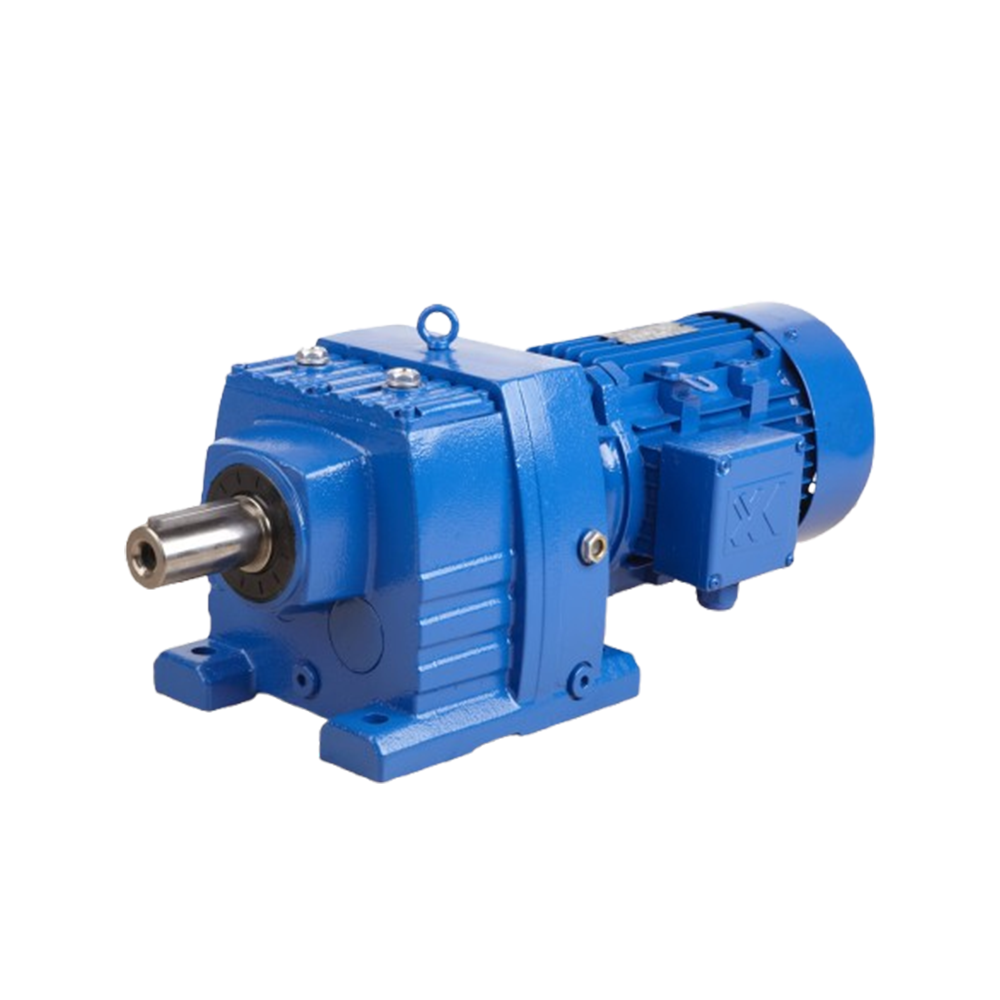
Selecting the right gear motor constitutes a critical operational decision for any facility manager. Specify the wrong gear type, and you invite premature wear, excessive noise, and catastrophic mechanical failure in continuous-duty applications. A mismatched gearbox quickly destroys productivity on the factory floor. Enter the Helical Gear Motor, which stands as the definitive industrial standard for high-efficiency, high-torque power transmission. Engineers rely on it heavily for the most demanding applications across global manufacturing sectors.
While helical gearing carries a slightly higher initial purchase cost than some basic alternatives, its unique mechanical geometry provides measurable, long-term advantages. You gain exceptional system reliability, extended equipment lifespan, and significantly lower energy consumption over years of operation. In this comprehensive guide, we will explore exactly how helical tooth geometry transforms mechanical performance. We will examine core evaluation criteria and rigorously compare common alternatives. You will learn how to manage implementation realities like axial thrust and specialized lubrication. Ultimately, you will discover exactly where these robust motors deliver the greatest operational advantages.
Key Takeaways
Gradual Engagement: Angled teeth ensure smoother transition of forces, drastically reducing vibration and operational noise compared to spur gears.
High Efficiency: Helical gear motors consistently deliver 90–98% energy efficiency, minimizing heat generation and power loss.
Superior Load Capacity: Multiple teeth share the load simultaneously, allowing for higher torque transmission in a compact footprint.
Engineering Trade-off: The angled tooth design generates axial thrust, requiring robust thrust bearings and precise housing alignment.
The Mechanical Advantage: How Tooth Geometry Dictates Performance
In high-speed or heavy-load applications, standard straight-cut spur gears frequently fail prematurely. They suffer from a destructive mechanical phenomenon known as "tooth slap." This sudden impact loading occurs when straight teeth smash together simultaneously across their entire width. Sudden impact loading causes intense vibration, extreme noise, and accelerated metal fatigue. Over time, these violent collisions break down the lubricant film. They ultimately cause microscopic pitting on the gear surface.
The helical solution completely eliminates this violent collision. Manufacturers cut the teeth at a precise angle to the gear face. This helix angle fundamentally changes the power transmission dynamics. Contact begins smoothly at one extreme end of the tooth. As the gear rotates, the engagement gradually spreads across the entire face.
This angled design delivers a profound operational outcome. Continuous, progressive contact ensures at least two teeth remain engaged at all times. This overlapping action completely eliminates the harsh shock loading characteristic of straight gears. Consequently, you get significantly smoother rotational power delivery. This mechanical stability proves absolutely essential for precision manufacturing processes and continuous material handling equipment.
Best Practice: When upgrading from spur to helical systems, rigorously verify your mounting alignment. Smooth power delivery still requires rigid foundational support to prevent destructive shaft misalignment.
Core Evaluation Criteria: Why Specify a Helical Gear Motor?
When designing a modern drive system, engineers must evaluate multiple performance metrics carefully. A Helical Gear Motor consistently excels across three critical categories.
1. Workplace Noise and Vibration Reduction (Compliance & Safety)
Gradual tooth engagement dramatically lowers the overall decibel (dB) output of the machinery. Because the teeth slide into contact smoothly, they avoid the loud, resonant clattering of straight-cut gears. This noise reduction holds massive relevance for workplace safety and regulatory compliance. OSHA heavily regulates noise compliance in crowded industrial facilities, often capping exposure at 85 dBA for an eight-hour shift. When multiple motors run simultaneously on a busy plant floor, ambient noise quickly approaches dangerous levels. Specifying quieter gearboxes helps facilities maintain safe environments. It reduces the need for bulky, expensive acoustic enclosures and minimizes operator fatigue.
2. Energy Efficiency and Operating Costs
These motors boast an exceptional high-efficiency rating. They typically achieve up to 98% efficiency per gear stage. We can contrast this starkly against the severe energy loss common in alternative gear types. Less efficient gearboxes lose kinetic energy by converting it into trapped heat. Over thousands of operational hours, this lost power dramatically inflates industrial utility bills. By retaining up to 98% of input electrical power, helical units deliver massive long-term electricity cost savings. They excel particularly during continuous-duty cycles where energy waste compounds rapidly day after day.
Common Mistake: Do not oversize your motor simply to compensate for a low-efficiency gearbox. This inflates your initial capital expenditure and wastes electricity continuously.
3. Power Density and Torque Capacity
Power density dictates exactly how much rotational force a gearbox delivers relative to its physical size and weight. Helical designs feature a substantially increased contact ratio. Because the teeth are angled, more tooth surface area engages simultaneously under load. This robust geometry allows the unit to transmit significantly higher loads safely. You can push more torque through the system without increasing the physical dimensions of the gearbox casting. Compact, high-torque solutions remain highly prized in modern equipment design, especially when factory floor space carries a premium.
Helical vs. Alternative Gear Motors: A Decision Framework
Engineers must weigh competing gear technologies before making a final specification. Understanding these performance gaps prevents costly deployment errors and unnecessary maintenance downtime.
Helical vs. Spur Gearing
Spur gears face severe mechanical limitations. They are generally restricted to low-speed, fractional-horsepower applications due to excessive noise and high impact stress. If you run them too fast, they vibrate violently and degrade quickly. Helical gears represent the necessary, logical upgrade for high-speed, high-torque environments. While spur gears cost less to manufacture initially, their cheaper price tag often deceives buyers. Helical gears offer a superior return on investment through dramatically extended longevity and reduced maintenance intervals.
Helical vs. Worm Gearing
Worm gears offer excellent shock absorption. They also provide natural self-locking capabilities, helping prevent unwanted reverse rotation. However, you face a harsh efficiency reality when deploying them. Worm gears suffer massive energy losses, often operating at merely 50-80% efficiency. This happens because worm gears rely on high sliding friction between the worm shaft and the wheel, which generates excessive thermal energy.
Your shortlisting logic should remain strictly objective. Choose helical systems for continuous, high-efficiency power transmission. Choose worm gears only if severe space constraints demand a tight right-angle drive on a tight budget. They also make sense if inherent load-holding (anti-backdrive) is strictly required for operator safety.
Gear Technology Assessment Summary
Operational Metric
Helical Gears
Spur Gears
Worm Gears
Energy Efficiency
90% - 98% (High)
90% - 95% (High)
50% - 80% (Low)
Acoustic Output
Very Low
High (Impact Noise)
Low (Sliding Contact)
Torque Density
Exceptional
Moderate
Moderate to High
Primary Application
Heavy Continuous Duty
Low-Speed Actuation
Right-Angle / Self-Locking
Implementation Realities: Managing Axial Thrust and Lubrication
Every sophisticated engineering solution involves technical trade-offs. We must address the primary drawback of helical gearing objectively. The helix angle pushes the gears apart along the shaft as they rotate. This lateral force is known professionally as axial thrust.
Managing this axial thrust challenge requires specific system design choices. You must specify a motor equipped with heavy-duty thrust bearings. Tapered roller bearings handle these complex axial loads exceptionally well. Furthermore, you need highly rigid gearbox housings. If the cast iron or aluminum housing flexes under load, shaft deflection occurs. Shaft deflection alters the tooth mesh, leading to rapid gear failure.
Lubrication demands also require strict attention from your maintenance team. The unique combination of rolling and sliding friction on angled teeth severely stresses standard industrial oils. You must utilize specific high-pressure gear lubricants formulated with extreme pressure (EP) additives. Adhering to the manufacturer viscosity requirements remains non-negotiable for long-term health. Following strict oil sampling and maintenance schedules prevents destructive tooth pitting.
Briefly, extreme industrial applications sometimes utilize a double helical design. Engineers commonly call these herringbone gears. They feature opposing helix angles cut into a single blank. These opposing angles naturally cancel out internal axial thrust entirely. However, machining these complex shapes demands a massive manufacturing premium, restricting them to massive turbines and heavy mining equipment.
Application Fit: Where Helical Gear Motors Win
Certain industries rely almost exclusively on this exact technology due to its specific performance characteristics. Here is where the helical advantage dominates the factory floor.
Material Handling & Conveyors: Large distribution centers demand continuous, steady-state operation. Reliability and low noise remain paramount when moving bulk goods across sprawling warehouse floors over multiple shifts.
Extruders & Mixers: Chemical processing and plastics manufacturing require massive, unyielding rotational force. These sturdy gearboxes easily handle the high, constant torque required for processing dense raw materials.
Packaging Machinery: Smooth, jitter-free motion prevents delicate product damage. The overlapping tooth engagement provides the fluid power delivery necessary to maintain precise mechanical synchronization across multiple automated axes.
We highly advise buyers to execute a few critical next steps before requesting vendor quotes. Proper sizing guarantees you receive a reliable drive unit.
Calculate your precise required service factor based on shock loads.
Determine whether your machine runs a continuous 24/7 cycle or an intermittent duty cycle.
Map out the exact mounting orientation (horizontal, vertical, flange-mounted) to ensure proper bearing lubrication.
Conclusion
When analyzing heavy-duty power transmission needs, the final verdict remains undeniably clear. A Helical Gear Motor stands as the definitive choice for demanding industrial applications. It perfectly balances high energy efficiency, exceptionally low noise, and robust heavy load capacity.
We encourage engineering teams to look far beyond the initial purchase price. Evaluate the complete lifecycle cost of the equipment meticulously. Factor in your projected energy savings over a decade of continuous operation. Consider the immense monetary value of reduced maintenance downtime. By selecting superior helical geometry upfront, you guarantee a more resilient, profitable, and quiet industrial operation.
FAQ
Q: Are helical gear motors reversible?
A: Yes, they can operate in both directions. However, the thrust bearing design inside the gearbox must accommodate bidirectional axial loads. When the motor reverses, the direction of the axial thrust also reverses. Engineers must ensure the internal components are rated for this alternating force.
Q: Why are helical gears more expensive than spur gears?
A: The manufacturing process drives the cost difference. Machining angled teeth requires complex, highly precise CNC equipment. Additionally, the inherent axial thrust requires manufacturers to install upgraded, heavy-duty thrust bearings and stiffer housings. These premium components directly increase overall production costs.
Q: Can a helical gear motor be back-driven?
A: Yes. Unlike high-ratio worm gears, helical gears are highly efficient in reverse. They will back-drive naturally if the load pushes against the motor. If your application requires the load to hold position when power is cut, you must equip the system with an external brake.
Q: What is the typical lifespan of a helical gear motor?
A: Lifespan is highly dependent on the service factor and lubrication quality. However, well-maintained units in properly sized applications routinely exceed 20,000 to 50,000 operating hours. Following strict oil change schedules and monitoring vibration levels will maximize the operational life of the gearbox.