When selecting a gearmotor for high-load applications, understanding the differences between helical gearmotors and spur gearmotors is crucial. The choice of gear type plays a significant role in determining the efficiency, lifespan, noise level, and cost-effectiveness of the equipment. High-load industrial applications, such as conveyors, cranes, and automated systems, require robust gearmotors that can withstand heavy operational demands while maintaining smooth and reliable performance. At BAFFERO, we offer a range of high-quality helical gearmotors that deliver superior performance, tailored to meet the needs of your specific industrial application.
Basic Definitions: Spur Gearmotor and Helical Gearmotor
To make an informed decision, it's important to understand the basic principles behind spur gearmotors and helical gearmotors.
Spur Gear Basics: Straight Teeth, Simple Manufacture
A spur gearmotor uses gears with straight teeth, which mesh directly and parallel to the axis of rotation. Spur gears are simple to design and manufacture, making them cost-effective for applications where noise and efficiency are not critical concerns. They are commonly used in low-to-moderate load applications but struggle with high-torque, high-speed demands due to their efficiency limitations and higher noise output.
While spur gearmotors are commonly used in simpler machinery where space is not a significant issue, they are less effective in high-load environments due to the sudden engagement of their teeth, which causes more vibration and higher wear over time.
Helical Gearmotor Basics: Angled Teeth, Gradual Engagement
In contrast, a helical gearmotor uses gears with teeth that are cut at an angle to the axis of rotation. This angled design allows for a more gradual engagement between the teeth, resulting in smoother operation and better load distribution. Helical gearmotors are known for their higher efficiency, smoother and quieter operation, and ability to handle significantly higher loads than spur gears. The gradual meshing of teeth also reduces vibration, leading to quieter performance—an important factor in high-load and high-torque applications.
Performance Comparison: Load, Noise, Speed, Efficiency
When it comes to high-load applications, performance is key. Let’s break down how helical gearmotors and spur gearmotors compare in terms of load handling, noise, speed, and efficiency.
Load Handling: Multiple Tooth Contact in Helical Gears
One of the major advantages of helical gearmotors is their ability to handle larger loads. This is due to the fact that the angled teeth in helical gears engage gradually and maintain multiple points of contact at once, distributing the load evenly across the surface of the teeth. This not only allows helical gearmotors to handle higher torque but also helps prevent excessive wear and tear on the motor, increasing the lifespan of the gearmotor.
In comparison, spur gearmotors only engage at a single point of contact, which results in higher stress on individual teeth. This makes spur gearmotors less efficient in handling high loads and can lead to quicker wear, making them unsuitable for heavy-duty applications.
Noise and Vibration: Helical Lower Than Spur
Another key difference between these gear types is noise and vibration. Due to the gradual engagement of the teeth, helical gearmotors operate much more quietly than spur gearmotors. The smoother meshing of the helical gears minimizes vibration and reduces the impact on the surrounding environment, making them ideal for applications in noise-sensitive areas.
Spur gears, on the other hand, generate more noise and vibration due to their abrupt tooth engagement. This can lead to increased wear and reduced operational efficiency, especially in high-load environments where the stress on the gears is higher.
Speed and Efficiency Trade-Offs
Helical gearmotors tend to be more efficient than spur gearmotors, particularly in high-load and high-speed applications. The efficiency of a helical gearmotor comes from its optimized tooth geometry, which reduces friction and power loss during operation. The ability of helical gears to transmit power more smoothly results in higher torque and speed capabilities, while maintaining a high level of energy efficiency.
While spur gearmotors can be effective in lower-speed, lower-load applications, they are not as energy-efficient when it comes to high-speed operation. In high-load environments, helical gearmotors are more reliable, providing consistent performance over longer periods without compromising on efficiency.
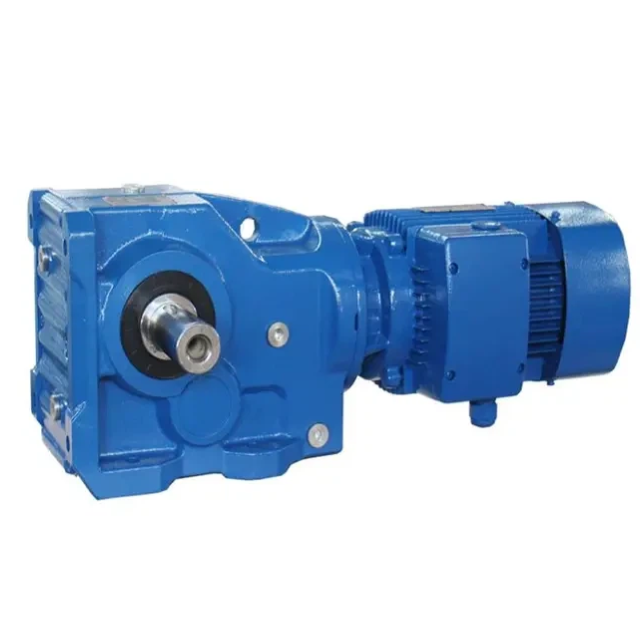
Installation and Design Flexibility: Parallel Shafts, Right-Angle, Space Constraints
Another important factor in selecting the right gearmotor is the design flexibility and space constraints of your application. Both helical and spur gearmotors offer different mounting options, which can affect the installation process.
Helical Allows Flexible Mounting
Helical gearmotors are highly versatile in terms of installation. They can be configured as inline gearmotors, where the motor and gear are aligned along the same axis, or as right-angle gearmotors, where the motor output is at a 90-degree angle. This flexibility allows helical gearmotors to be used in a wide range of configurations, from conveyor systems to high-torque lifting equipment.
Spur Limited; Cost Benefits vs Limitations
Spur gearmotors, while cost-effective and easy to manufacture, tend to be limited in terms of mounting options. Spur gears typically only operate in inline configurations, which can be restrictive in applications where space constraints are a concern. Additionally, their reduced efficiency in high-load applications limits their usefulness in more demanding environments.
Cost, Maintenance, and Lifecycle Considerations
Cost is always a key factor when selecting a gearmotor, but it’s important to balance upfront costs with long-term performance and maintenance needs.
Spur Cheaper Initially but May Cost More in Side Effects
While spur gearmotors are less expensive initially, their performance drawbacks—such as higher noise levels, increased wear, and lower efficiency—can result in higher maintenance costs and more frequent replacements. Over time, these additional expenses can outweigh the initial savings, especially in high-load applications that demand continuous operation.
Helical May Have Higher Initial Cost but Better Lifecycle in Heavy/High-Speed Use
On the other hand, helical gearmotors generally come with a higher upfront cost due to their advanced design and manufacturing processes. However, their superior efficiency, reduced maintenance needs, and longer service life make them a more cost-effective solution in the long run. For applications that require continuous operation, such as material handling or cranes, the investment in a helical gearmotor often pays off through reduced downtime, lower maintenance costs, and improved performance.
Application Case Studies: Where Helical Gearmotors Shine
Helical gearmotors excel in various industrial applications, particularly those that involve high torque, heavy loads, and continuous operation. Let’s take a look at some case studies where helical gearmotors offer distinct advantages over other gear types.
Conveyors in Material Handling
In material handling applications, such as conveyor systems, helical gearmotors are ideal due to their ability to handle heavy loads and provide consistent power transmission. Their quiet and efficient operation ensures smooth and continuous movement of materials, even in demanding environments.
Packaging Machines
In packaging machines, where precision, reliability, and efficiency are crucial, helical gearmotors offer excellent performance. Their ability to operate smoothly and quietly while handling varying loads makes them the preferred choice for high-speed packaging operations.
Cranes and Heavy-Lifting Systems
For cranes and heavy-lifting systems, helical gearmotors provide the high torque needed to lift and move heavy loads efficiently. Their durability and high load capacity make them essential for lifting applications that require continuous operation in tough conditions.
Conclusion
In conclusion, helical gearmotors offer significant advantages over spur gearmotors in high-load industrial applications. Their ability to handle greater loads, reduce noise, and improve efficiency make them the superior choice for demanding environments. While helical gearmotors may have a higher initial cost, their long-term performance, reliability, and lower maintenance costs make them a more valuable investment in the long run. At BAFFERO, we provide a range of helical gearmotors with modular configurations to meet the needs of various applications.
Contact us today to learn more about how our helical gearmotors can enhance your operations.
FAQs
Q1: What is the main difference between helical and spur gearmotors?
A: Helical gearmotors have angled teeth for smoother engagement and higher load capacity, while spur gearmotors have straight teeth and are less efficient in high-load applications.
Q2: Can helical gearmotors be used in both inline and right-angle configurations?
A: Yes, helical gearmotors offer flexibility in installation, including both inline and right-angle configurations.
Q3: Are helical gearmotors more efficient than spur gearmotors?
A: Yes, helical gearmotors are more efficient, especially in high-load and high-speed applications, due to their smooth gear engagement.
Q4: What industries typically use helical gearmotors?
A: Helical gearmotors are widely used in material handling, automation, packaging, and lifting applications due to their reliability and high performance.


