In the world of power transmission, the helical gearmotor is a key component used in a wide array of applications. From conveyors in industrial settings to pumps in automated systems, the helical gearmotor provides high-efficiency performance while maintaining durability under heavy loads. As industries evolve, the demand for more efficient and reliable systems continues to grow, making the helical gearmotor an essential part of many mechanical solutions. For businesses seeking high-quality, reliable gearmotors, BAFFERO is a leader in delivering tailored solutions, ensuring that every application gets the most effective power transmission available.
What Is a Helical Gearmotor?
A gearmotor is a combination of a gear reducer and an electric motor in one compact unit, designed to convert electrical energy into mechanical energy, reducing the speed of the motor while increasing the torque output. The helical gearmotor is a type of gearmotor that uses helical gears to transmit power. These gears have teeth that are cut at an angle, making them capable of handling greater loads with smoother operation compared to other gear types.
Definition of "Gearmotor"
A gearmotor is an assembly that integrates an electric motor and a gearbox. The motor generates rotational motion, and the gearbox reduces or increases the speed of that motion while changing the torque. The gearmotor design eliminates the need for separate components, reducing space, complexity, and costs.
Specifics of the "Helical" Gear Set
In a helical gearmotor, the gears are cut with angled teeth, allowing for smoother engagement between the teeth as they mesh. This design results in less vibration, quieter operation, and increased load capacity compared to other gear types, such as spur gears. The angled teeth distribute the load more evenly across the gear surface, reducing the wear and tear that typically occurs with less efficient designs.
How Does a Helical Gearmotor Work?
The helical gearmotor operates on a simple yet effective mechanism. The electric motor generates power, which is transferred to the helical gears. These gears then reduce the speed of the motor’s rotation and increase the torque, which is then delivered to the application. The design of the gears allows for smooth and continuous power transmission, making it ideal for heavy-duty, high-torque applications.
Key Components: Motor + Gearbox
At the heart of the helical gearmotor is its two main components: the electric motor and the gear reducer. The motor generates the necessary rotational force, while the gearbox, consisting of helical gears, adjusts the speed and torque to match the specific requirements of the application. The integration of both components into a single unit makes it highly efficient, reducing the need for multiple separate systems and saving both space and installation costs.
Helical Gear Geometry: Angled Teeth, Gradual Engagement
The key feature of the helical gearmotor lies in the geometry of its gears. The teeth of the helical gears are cut at an angle, allowing them to mesh gradually rather than abruptly, as with straight-cut spur gears. This gradual engagement reduces the noise and vibrations commonly associated with gear transmissions. Moreover, the helical design increases the surface area contact between the teeth, resulting in better load distribution and increased operational efficiency.
Why Use a Helical Gearmotor Instead of Simpler Gear Types?
While there are various gear types available for power transmission, the helical gearmotor offers several advantages over simpler designs, such as spur gearmotors. Here’s why the helical gearmotor stands out in industrial applications:
Comparison with Spur Gearmotors
Spur gears have straight teeth and mesh in a single contact point. While they are simple and cost-effective, they generate more noise and experience higher wear due to the less efficient engagement of their teeth. In contrast, helical gears offer smoother engagement and can handle higher loads due to their angled teeth. This makes them particularly suitable for applications that require quieter operation and smoother, more reliable power transmission.
Typical Applications Where Helical Is Preferred
Helical gearmotors are widely used in applications where both torque and efficiency are crucial. For example, conveyors in material handling systems, mixers in food processing, and automation equipment in industrial settings all benefit from the helical gearmotor’s ability to provide stable, high-torque transmission. Its ability to operate in confined spaces, coupled with its efficient energy use, makes it ideal for applications that demand continuous, reliable performance.
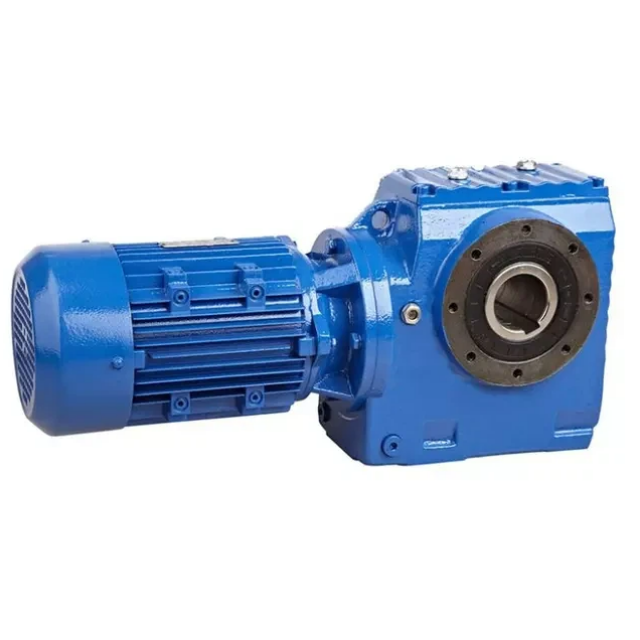
Major Design Variants in Helical Gearmotors
Helical gearmotors come in different configurations to suit a variety of applications. Some of the major design variants include inline, helical-bevel, and shaft-mounted gearmotors, each offering unique advantages depending on the specific needs of the installation.
Inline Helical Gearmotor
The inline helical gearmotor is the most common type, where the motor and gearbox are aligned along a single axis. This design is ideal for applications where space is at a premium, and the setup requires a compact and efficient solution. It’s widely used in automation systems, pumps, and mixers.
Helical-Bevel / Right-Angle Helical Gearmotor
In cases where space constraints demand a right-angle drive, the helical-bevel gearmotor is the ideal solution. It combines the helical gears with a bevel gear to provide a 90-degree turn in the drive shaft, making it perfect for applications where the direction of the drive needs to be changed, such as in conveyors and lifts.
Shaft-Mounted, Modular Series
BAFFERO offers a range of helical gearmotors with modular designs, including shaft-mounted gearmotors. These are highly versatile, offering different mounting configurations, such as foot-mounted, flange-mounted, or torque arm mounted. With these modular options, businesses can easily tailor the design to meet their specific operational needs, whether for cranes, material handling, or general automation.
How to Interpret Spec Sheets and Key Data for Helical Gearmotors
When selecting a helical gearmotor, understanding the technical specifications is essential to ensuring you choose the right product for your application. Here are some key factors to consider:
Rated Torque and Reduction Ratio
The rated torque specifies how much load the gearmotor can handle without damaging the system. The reduction ratio indicates how much the motor’s speed is reduced by the gearbox to achieve the desired output speed. Both of these values should align with the specific requirements of your application.
Mounting Options
Helical gearmotors come with various mounting options to suit different installations. Whether you need a foot-mounted, flange-mounted, or torque-arm mounted design, the choice of mounting type will depend on the available space and the orientation of the drive system.
Choosing Series (Modular System) – Referencing BAFFERO’s Modular System
BAFFERO’s modular system offers flexibility in gearmotor design, allowing users to select the most appropriate series based on application requirements. The R, F, K, and S series offer various configurations for different torque, speed, and installation requirements, ensuring that customers can find the perfect fit for their needs.
Choosing the Right Helical Gearmotor for Your Project
Selecting the right helical gearmotor requires a careful assessment of your application’s needs, space constraints, and environmental factors. Here are some important considerations:
Assessing Your Application: Load, Speed, Environment
Before choosing a gearmotor, it’s crucial to understand the load it will be expected to carry, the speed requirements, and any environmental conditions that may affect the gearmotor’s performance. Heavy-duty applications, for example, will require a helical gearmotor with a higher torque capacity and durability.
Identifying Installation Type and Space Constraints
The installation type and available space are also critical factors in choosing the right helical gearmotor. Consider whether you need a compact inline design or a right-angle solution for tight spaces. The modular design offered by BAFFERO ensures that there is a solution for almost any layout or operational constraint.
Ensuring Service Life and Maintenance Considerations
To maximize the service life of your gearmotor, choose one that is designed for the specific environmental conditions it will face. For example, a heavy-duty helical gearmotor built with precision-cast iron housing and hardened gears will provide greater durability, reducing downtime and maintenance costs in the long run.
Conclusion
In conclusion, the helical gearmotor is a vital component for many industrial applications, offering efficiency, durability, and versatility. With its ability to handle high loads, reduce noise, and provide smooth power transmission, it is the ideal solution for conveyors, automation systems, and other heavy-duty applications. BAFFERO’s modular system allows for tailored solutions to meet the specific needs of your operations. Whether you are looking for an inline design, a right-angle solution, or a shaft-mounted variant, BAFFERO has the right gearmotor for your project.
Contact us today to discuss your application and receive a tailored solution.
FAQs
Q1: What is the difference between helical and helical-bevel gearmotors?
A: Helical gearmotors are used for inline applications with high efficiency, while helical-bevel gearmotors provide right-angle transmission for limited space.
Q2: Can I get customized mounting options?
A: Yes, BAFFERO offers foot-mounted, flange-mounted, and torque-arm mounted gear units to suit your installation needs.
Q3: Which industries use BAFFERO helical gearmotors?
A: They are widely used in conveyors, packaging, mixing, material handling, and automation systems due to their reliability and adaptability.
Q4: How do I choose the right helical gearmotor for my project?
A: Consider factors like load, speed, environmental conditions, and installation constraints. BAFFERO’s modular system can help tailor a solution that fits your specific needs.


