Legacy pneumatic actuation hides massive operational costs. Air leaks demand continuous compressor operation. Imprecise mechanical control causes product waste. Facility managers and process engineers face a strict balancing act. You must achieve tighter process tolerances and higher productivity while integrating remote diagnostics. At the same time, you battle operational downtime, energy waste, and complex integrations. Relying on outdated compressed air infrastructure limits plant efficiency. It creates unacceptable maintenance overhead.
Transitioning to electric valve actuation solves these bottlenecks directly. This shift replaces mechanical reliance with a data-driven, energy-efficient approach to flow control. Modern electric systems deliver programmable precision and real-time feedback. Implementing this technology requires evaluating fail-safes and initial capital expenditure. However, the operational benefits easily outweigh the limitations of legacy compressed air systems.
Electric actuators eliminate the energy waste associated with compressed air systems, significantly lowering lifecycle operational expenses over a 5-to-10-year lifecycle.
A modulating electric valve actuator provides superior positioning accuracy and programmable control, eliminating the deadband and hysteresis issues common in pneumatic positioners.
The ubiquitous availability of electricity simplifies installation, eliminating the need to expand costly and maintenance-heavy compressed air infrastructure.
Integration with SCADA and PLC systems enables predictive maintenance and remote monitoring, reducing unplanned downtime through real-time torque and position data.
Initial capital expenditure is higher than pneumatic alternatives; justifying the investment requires a clear ROI analysis based on lifecycle energy savings, durable performance, and reduced maintenance overhead.
The Shift in Process Control: Defining the Success Criteria
Traditional pneumatic and hydraulic systems carry significant hidden costs. Compressors require constant maintenance, lubrication, and filter replacements. Air lines suffer from condensation buildup. When temperatures drop, this condensation freezes, blocking air supply and paralyzing the valve. Even in climate-controlled environments, moisture introduces rust and contaminants into sensitive internal valve mechanisms. The most significant drawback is parasitic energy loss. Pneumatic systems demand continuous air pressure to maintain valve positions. This constant compressor operation drains power relentlessly, even when valves remain stationary.
Routing rigid air lines through complex facility layouts presents severe physical constraints. Expanding a pneumatic network requires extensive piping, pressure testing, and structural support. If you add a new processing skid 500 feet from the main compressor header, you must run 500 feet of stainless steel tubing. You also have to account for pressure drops over that distance, often forcing you to install localized air receiver tanks or booster compressors.
Modern process plants require a different approach. We must define strict success criteria for a process control valve actuator. High-resolution precision is non-negotiable. Facilities need seamless data feedback integrated directly into centralized control systems. Verifiable energy efficiency must replace continuous power drains. Predictable, durable performance is required to minimize unplanned outages. Engineers need actuators that report their own mechanical health status. The modern standard demands equipment that actively contributes to plant optimization rather than simply reacting to basic analog command signals.
Core Benefits of Electric Valve Actuators in Industrial Environments
Precision, Modulating Control, and Programmability
Strict tolerance environments demand exact flow regulation. A modulating electric valve actuator achieves exact valve positioning using continuous electronic feedback. Internal absolute encoders track the valve stem position down to fractions of a millimeter. This eliminates the deadband and hysteresis commonly found in mechanical pneumatic positioners. When a control system requests a 43.5% open position, the electric actuator drives the valve to exactly 43.5% and holds it there without continuous hunting or drifting.
Modern electric actuators offer highly programmable control profiles. Engineers can customize opening and closing speeds across different stages of the valve stroke. You can program an actuator to close rapidly for the first 80% of its stroke, then slow down significantly for the final 20%. This specific motion profile prevents water hammer in liquid lines. It ensures swift valve responsiveness while protecting piping infrastructure from destructive pressure spikes. You optimize overall manufacturing speeds by tailoring the actuator's mechanical response to the specific fluid dynamics of the process line.
Eliminating overshoot directly improves product consistency. In chemical dosing, precise additive injection prevents batch spoilage. Water treatment facilities rely on accurate flow control to maintain strict pH levels. Food and beverage processing requires exact temperature regulation through steam valve modulation. Electric actuation guarantees this level of repeatability, directly increasing yield and ensuring stringent quality control standards are met consistently.
Energy Efficiency and Operational Cost Reduction
Electric systems operate on a power-on-demand principle. They consume significant electrical power only when actively moving the valve. Once the valve reaches its target position, self-locking gear trains hold the stem in place. The motor powers down, drawing only minimal current to maintain digital communication with the control room. Contrast this with pneumatic systems. Compressors must run continuously to maintain header pressure, compensating for inevitable leaks across the air distribution network. Replacing continuous energy draw with intermittent power usage drastically reduces utility consumption.
Electricity is readily available at almost all industrial sites. This simplifies installation significantly. Expanding facility operations often requires adding new control valves in remote areas. Running a standard power cable and a digital communication line is vastly easier than piping new pneumatic lines. You eliminate the need for new compressor stations, air dryers, and heavy-duty piping supports. This makes Electric Valve Actuators highly cost-effective to deploy during plant expansions or retrofits.
Calculating utility cost reductions requires a structured framework. First, audit the existing pneumatic system to identify the energy consumed by compressors solely to maintain air pressure. Factor in local industrial electricity rates. Next, calculate the maintenance hours spent servicing air dryers, lubricators, and fixing air leaks. Compare these figures against the intermittent power draw of electric motors. The elimination of compressed air infrastructure maintenance yields substantial long-term savings that justify the initial hardware investment.
Advanced Diagnostics and Remote Monitoring
Digital communication transforms valves into smart field devices. Built-in absolute encoders and microprocessors support industry-standard protocols. Integration capabilities include HART, Profibus, Modbus, and Ethernet/IP. These protocols allow the actuator to transmit a wealth of diagnostic data back to the Distributed Control System (DCS) or SCADA network. Operators receive far more than simple open/close status. They gain visibility into the mechanical health of the entire valve assembly.
This data enables a shift from reactive to predictive maintenance. Actuators monitor real-time torque profiles during every stroke. If a valve begins to stick due to mineral scaling or internal wear, the actuator must apply more torque to move it. The system logs this increased torque demand and triggers a maintenance alert long before the valve seizes completely. Monitoring stroke times and motor temperatures provides additional early warning signs of mechanical degradation. Identifying valve wear before failure occurs ensures less downtime and prevents catastrophic process interruptions.
Diagnostic Alert
Potential Mechanical Cause
Field Resolution Strategy
High Torque Alarm (Mid-Stroke)
Scale buildup on valve trim or bent valve stem.
Schedule valve body inspection; flush line to remove debris.
High Breakaway Torque
Valve seat degradation or sticky process fluid hardening.
Inject seat lubricant; plan for seat replacement during next outage.
Extended Stroke Time
Motor fatigue, voltage drop, or increased packing friction.
Verify supply voltage at terminals; loosen packing gland slightly.
Motor Over-Temperature
Excessive duty cycle (hunting) or high ambient heat.
Tune PID loop to widen deadband; install sunshade over actuator.
Loss of Signal (4-20mA)
Broken control wire or failed I/O card in the PLC.
Electric actuation eliminates venting emissions entirely. Natural gas pipelines often use pneumatic actuators driven by the pressurized pipeline gas itself. These systems vent methane directly into the atmosphere during every stroke. Replacing them with electric units eliminates these greenhouse gas emissions. Furthermore, electric systems remove the risk of hydraulic fluid leaks, protecting local soil and water tables from contamination.
Reliable remote control improves personnel safety. Operators can actuate valves located in hazardous, hard-to-reach, or extreme-temperature zones from the safety of the control room. This reduces the need for manual interventions on scaffolding, inside confined spaces, or near high-pressure steam lines. Predictable valve performance ensures safety procedures execute flawlessly during process transitions.
The workplace environment also benefits from electric technology. Pneumatic exhausts and compressor rooms generate significant noise pollution. Electric actuators operate quietly and cleanly. This makes them highly suitable for sanitary environments, pharmaceutical cleanrooms, or noise-restricted manufacturing facilities where maintaining a controlled, quiet atmosphere is required.
Categorizing Electric Actuation Solutions for Specific Valve Types
Multi-Turn Electric Actuators
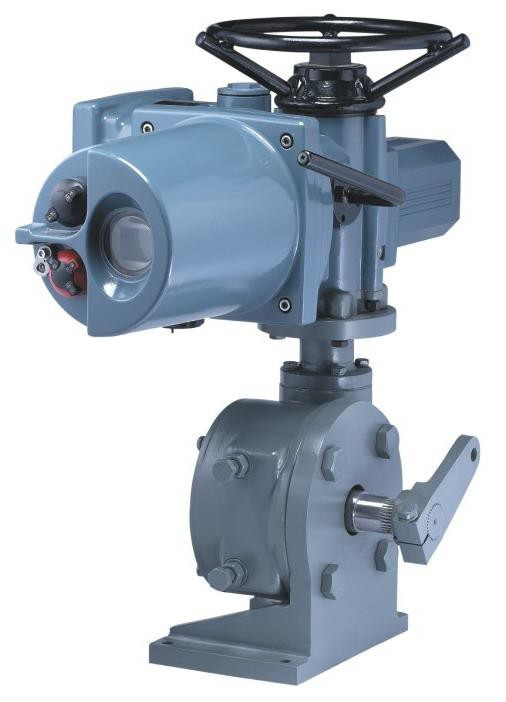
Gate, globe, and pinch valves require multiple stem rotations to move from fully open to fully closed. These linear-motion valves demand specific mechanical capabilities. A multi-turn electric actuator is engineered specifically for these applications. They provide continuous rotational output, driving the threaded valve stem upward or downward. They are frequently deployed in high-pressure steam lines, main water distribution headers, and heavy oil pipelines where robust, linear force is required.
Performance metrics for multi-turn units focus heavily on torque and thrust. High-pressure lines exert immense force against the valve plug. The actuator must generate sufficient thrust to overcome this differential pressure and seat the valve tightly. The internal bronze stem nut must be machined precisely to match the valve stem threads, ensuring smooth power transmission. Self-locking gear mechanisms, such as worm gear assemblies, are mandatory. They ensure the valve maintains its exact position even if facility power is lost, preventing the process fluid from forcing the valve open.
Part-Turn Electric Actuators (Quarter-Turn)
Ball, butterfly, and plug valves operate differently. They require only a 90-degree rotation to cycle fully. Sizing a part-turn electric actuator requires analyzing the specific torque curve of the quarter-turn valve. These valves are common in cooling water loops, chemical transfer lines, and HVAC systems. They offer rapid isolation and are generally more compact than their multi-turn counterparts.
Selecting the right part-turn unit requires balancing speed of operation with torque output. Breakaway torque is the most critical metric. Seated valves, especially ball valves, require a massive spike in torque to break the initial friction seal when opening. The actuator must deliver this peak torque instantly without stalling the motor. Once the seal is broken, the running torque drops significantly. Engineers must size the actuator based on this maximum breakaway requirement, not just the average running torque.
To properly size a part-turn unit, follow these field-tested steps:
Determine the maximum differential pressure across the valve in the closed position.
Consult the valve manufacturer's torque chart to find the raw breakaway torque at that specific pressure.
Apply a safety factor of 20% to 30% to account for future media buildup or seat swelling.
Select an actuator model where the rated output torque exceeds your calculated safety-factor torque.
Verify the actuator's operating speed aligns with the process requirements to avoid inducing water hammer.
Evaluating Trade-Offs: When to Choose Electric Over Pneumatic
Building a solid business case requires a realistic comparison of CapEx versus OpEx. Electric actuators carry a higher upfront purchase price than basic pneumatic cylinders. However, buyers must evaluate the long-term operational savings. Eliminating compressor power consumption, reducing maintenance labor, and minimizing unplanned downtime quickly offsets the initial hardware costs. Facilities expanding their footprint often find that installing electric units is cheaper than upgrading their central air compressors and running hundreds of feet of new stainless steel air tubing.
Durability and lifecycle predictability heavily favor electric designs. Pneumatic cylinders suffer from internal wear-and-tear caused by moisture, rust, and compressor oil bypassing the filters. These contaminants degrade O-rings and score cylinder walls. Electric units feature sealed enclosures protecting self-lubricating gear trains. They suffer far less from environmental contamination, resulting in an extended operational lifespan and highly predictable maintenance intervals.
Speed of operation has traditionally been a constraint for electric technology. In Emergency Shutdown (ESD) scenarios, pneumatic spring-return systems can slam a valve closed in less than a second. Historically, electric motors required several seconds to gear down and drive the valve shut. However, modern electric gearing and programmable variable-frequency drives are closing this gap. High-speed electric actuators can now meet stringent ESD timing requirements, though they require careful specification to ensure the motor can handle the rapid deceleration without damaging the valve stem.
Environmental suitability dictates enclosure specifications. Deploying electric actuators in hazardous or highly corrosive areas requires strict adherence to safety standards. You must specify explosion-proof, ATEX-certified enclosures for environments containing flammable gases or dust. Coastal facilities or chemical plants require NEMA 4X or IP68 ratings to protect internal electronics from saltwater ingress and corrosive atmospheric degradation.
Evaluation Criteria
Electric Valve Actuators
Pneumatic Valve Actuators
Initial CapEx
Higher upfront hardware cost.
Lower initial hardware cost.
Infrastructure Required
Standard electrical wiring and data cables.
Compressors, air dryers, filters, rigid piping.
Energy Efficiency
High. Consumes power only during movement.
Low. Requires continuous compressor operation.
Control Precision
Excellent. High-resolution absolute encoders.
Moderate. Susceptible to hysteresis and deadband.
Maintenance Needs
Low. Sealed, self-lubricating gear trains.
High. Filter changes, leak repairs, lubrication.
Emergency Speed (ESD)
Improving, but requires specialized high-speed gearing.
Excellent. Rapid spring-return mechanical action.
Implementation Risks and Mitigation Strategies
Fail-Safe Mechanisms and Power Loss
The inherent vulnerability of electric actuation is losing motive power during a facility-wide electrical outage. If the grid fails, a standard electric actuator will lock in its last position. In many critical processes, this is unacceptable. Valves controlling high-pressure steam, reactive chemicals, or cooling water must fail to a safe, predictable position—either fully open or fully closed—to prevent catastrophic equipment damage or safety hazards.
Mitigating this risk requires specifying reliable fail-safe options. Battery backup systems can provide sufficient DC power to drive the valve to its safe position upon detecting a main AC power loss. Supercapacitors offer a maintenance-free alternative to batteries, storing enough energy for a single fail-safe stroke. For ultimate reliability, specify mechanical spring-return electric models. These units use the electric motor to compress a heavy-duty mechanical spring during normal operation. If power fails, the spring releases mechanically, driving the valve to the safe position without relying on stored electrical energy.
Integration with Legacy Control Systems
Upgrading to digital actuators in an older plant introduces communication bottlenecks. Modern digital actuators utilize advanced fieldbus protocols. Older Programmable Logic Controllers (PLCs) may only accept traditional analog signals. Forcing a digital device to communicate with an obsolete PLC can cause integration delays, software conflicts, and commissioning headaches.
To mitigate compatibility issues, utilize backward-compatible analog signals for immediate integration. Specify actuators equipped with standard 4-20mA input/output cards. This allows the new electric actuator to interface seamlessly with the legacy PLC for basic modulating control. Simultaneously, ensure the actuator has built-in digital capabilities disabled but ready. This strategy solves the immediate integration problem while laying the groundwork for future digital fieldbus upgrades without requiring new actuator hardware.
Selecting the Right Electric Actuator Manufacturer
Choosing the correct vendor is as critical as selecting the hardware. Do not base your decision solely on catalog specifications. Evaluate the electric actuator manufacturer based on their localized commissioning expertise. Complex modulating setups require field engineers who understand PID loop tuning and mechanical valve integration. Assess the availability of spare parts in your specific geographic region. Responsive technical support is vital when troubleshooting communication faults during a plant turnaround.
Verify all third-party certifications rigorously. Do not accept self-certified safety claims. If the application requires integration into a Safety Instrumented System (SIS), ensure the actuator carries an independent SIL (Safety Integrity Level) rating from agencies like TUV. Confirm that the IP or NEMA enclosure ratings match the specific operating environment. A NEMA 4 rating is insufficient if the actuator will be subjected to high-pressure chemical washdowns; a NEMA 4X or IP68 rating is mandatory.
Conclusion
Conduct a plant-wide pneumatic energy audit to quantify the exact kW/hr wasted by compressor leaks and continuous air pressure maintenance.
Calculate the maximum breakaway torque and running thrust for your specific valves under worst-case differential pressure scenarios.
Install a single electric actuator on a non-critical bypass line to test SCADA integration and establish baseline torque profiling.
Standardize your enclosure specifications based on environmental exposure, prioritizing NEMA 4X or explosion-proof ratings for hazardous areas.
FAQ
Q: What is the difference between an on/off and a modulating electric valve actuator?
A: An on/off actuator simply drives a valve to a fully open or fully closed position for basic isolation. A modulating actuator continuously adjusts the valve's position anywhere between 0% and 100% based on an analog or digital control signal. Modulating units require higher duty-cycle motors and precise internal positioners to handle constant, minute adjustments without overheating.
Q: Are electric valve actuators easier to install than pneumatic systems?
A: Yes, particularly in remote or expanding facility areas. Electric actuators only require standard power wiring and a communication cable. Pneumatic systems require rigid air piping, tubing, filter regulators, and sufficient compressor capacity. Pulling electrical cable is generally faster, less labor-intensive, and more flexible than routing and testing pressurized air lines.
Q: How do electric valve actuators handle facility power failures?
A: Standard electric actuators fail in their last position upon power loss due to self-locking gears. If a safe failure position is required, engineers must specify fail-safe models. These utilize internal battery backups, supercapacitors, or mechanical spring-return mechanisms to automatically drive the valve fully open or fully closed when main power drops.
Q: Are electric actuators safe to use in hazardous or explosive environments?
A: Yes, provided they are specified correctly. Manufacturers offer explosion-proof enclosures certified to ATEX, IECEx, or NEMA 7 standards. These heavy-duty housings are engineered to contain any internal electrical spark or explosion, preventing it from igniting flammable gases, vapors, or combustible dust in the surrounding atmosphere.
Q: What is the typical operational lifespan of a process control valve actuator?
A: With proper specification and routine maintenance, a high-quality electric actuator can operate reliably for 10 to 20 years. Their lifespan often exceeds pneumatic counterparts because sealed electric enclosures prevent internal contamination from moisture and dirty plant air, which typically degrades pneumatic cylinder seals and springs prematurely.
Q: How do lifecycle costs compare between electric and pneumatic actuators?
A: Electric actuators have a higher initial purchase price but significantly lower operating costs. They eliminate the massive energy drain of running air compressors and reduce maintenance labor spent fixing air leaks and replacing filters. Over a 5-to-10-year period, the utility and maintenance savings of electric units typically offset their higher upfront cost.
Q: Can a multi-turn electric actuator be adapted for use on quarter-turn valves?
A: Yes. A multi-turn actuator can drive a quarter-turn valve by attaching a secondary quarter-turn worm gearbox. The multi-turn actuator drives the input shaft of the gearbox, which then converts the multiple rotations into a high-torque, 90-degree output suitable for seating large ball or butterfly valves.