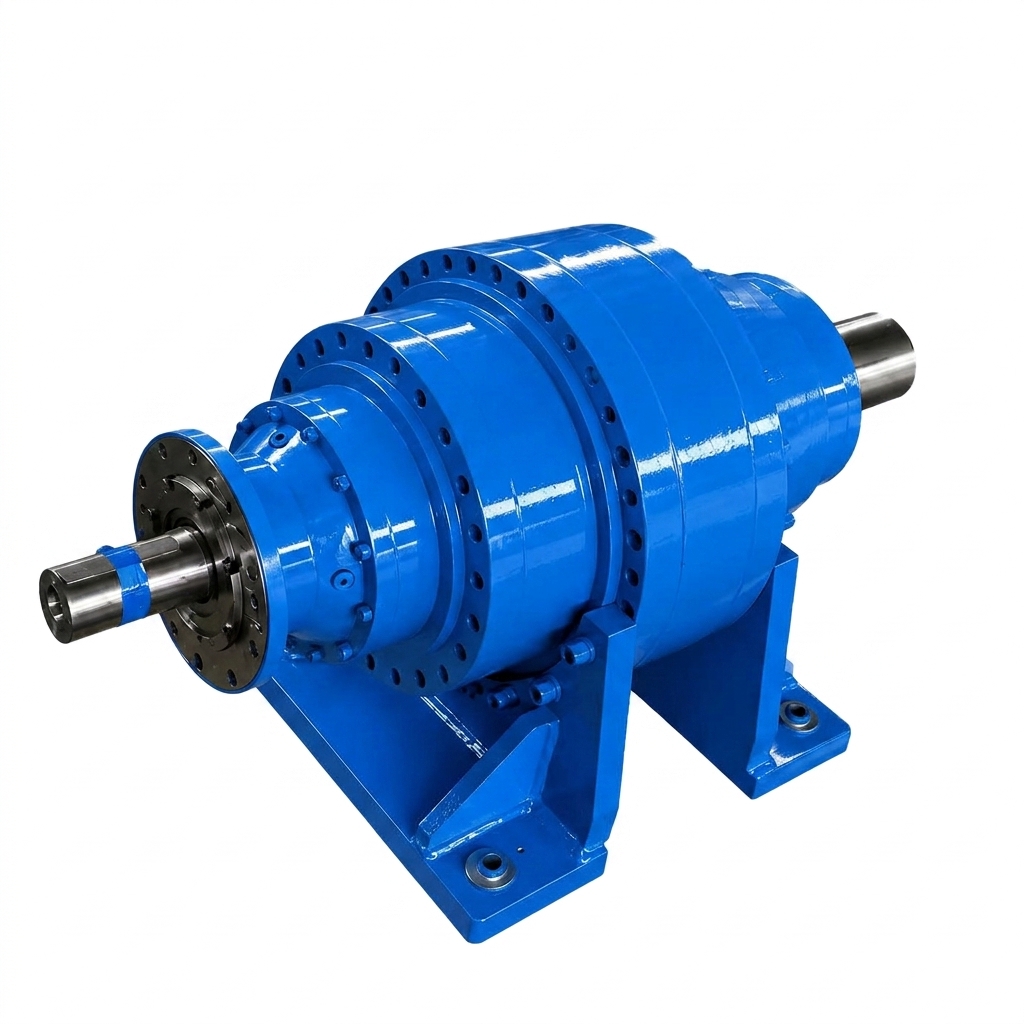
In continuous processing environments, zero downtime remains an absolute necessity. Seasonal sugar harvesting campaigns demand relentless 24/7 operation. Continuous chemical batching requires unwavering mechanical reliability to maintain product consistency. Unplanned drive failures in agitators, crystallizers, or diffusers quickly lead to catastrophic material spoilage. This sudden downtime halts production lines and destroys highly sensitive raw materials. To prevent these mechanical disasters, plants need exceptionally robust drive solutions.
An industrial planetary gearbox configured with a coaxial design provides the definitive answer. It delivers the necessary load distribution and mechanical density to sustain continuous high-torque operations. It easily survives harsh, space-constrained environments where standard parallel-shaft drives falter. In this article, you will discover why coaxial configurations excel under continuous heavy loads. We will explore the mechanical physics behind their incredible torque density. You will also learn how to evaluate service factors, manage thermal limits, and specify the most reliable unit for your plant infrastructure.
Key Takeaways
Load Distribution: Coaxial planetary designs share torque across multiple planet gears, preventing localized tooth stress under continuous heavy loads.
Footprint Efficiency: The in-line (coaxial) shaft arrangement allows for compact, high-torque output without requiring massive parallel-shaft footprints.
Application Specificity: Selecting the right unit requires prioritizing thermal capacity, advanced sealing (for chemical exposure), and stringent service factor calculations.
Implementation Focus: Rigid base-mounting and proactive lubrication management are critical to realizing the theoretical lifespan of heavy-duty units.
The Operational Baseline: Why Sugar and Chemical Plants Stress Standard Drives
Industrial processing plants push power transmission equipment to the absolute breaking point. Dense media inherently resist movement. Materials like crystallizing sugar massecuite or high-viscosity chemical polymers demand massive starting torque. Standard drives struggle immensely to initiate rotation in these thick substances. As the mixing process continues, the equipment endures unpredictable, violent shock loads. Blades hit dense pockets of material. These sudden spikes in mechanical resistance easily shatter standard gear teeth.
Continuous duty cycles change the entire engineering landscape. Round-the-clock operation drives up internal thermal generation and accelerates gear wear. Intermittent-duty manufacturing allows mechanical components sufficient time to cool down. Continuous chemical processes offer no such relief. The equipment traps heat, rapidly degrading standard lubricants and weakening metal components.
Furthermore, the surrounding environment aggressively attacks external surfaces. Airborne corrosive chemicals degrade standard cast-iron housings. Caustic chemical washdowns compromise standard rubber seals. In sugar refineries, fine abrasive sugar dust infiltrates unsealed bearings, acting like sandpaper on critical internal components.
Best Practice: Always map the specific environmental threats in your facility before finalizing housing materials and external coatings.
Plant operators cannot view a sugar industry gearbox as a simple, replaceable torque multiplier. It serves as the mechanical heartbeat of the refining process. Similarly, a chemical processing gear reducer functions as a frontline reliability asset. Standard drives inevitably fail under these combined operational pressures. Purpose-built planetary units thrive in these exact conditions.
Mechanics of the Coaxial Planetary Gear Unit in High-Torque Scenarios
The core strength of this equipment lies in its unique planetary kinematics. The mechanism relies entirely on intelligent load sharing. A central sun gear simultaneously drives multiple planet gears. These planet gears revolve within a stationary outer ring gear. This geometry distributes the rotational force across several distinct contact points. Standard gearboxes force a single pair of gear teeth to bear the entire load. Planetary designs divide that stress. This brilliant mechanical arrangement directly prevents single-point failures under heavy loads.
The in-line shaft arrangement offers incredible architectural benefits for plant designers. Input and output shafts align on the exact same axis. This maximizes torque density, typically measured in Newton-meters per kilogram (Nm/kg). You achieve massive torque output from a surprisingly compact housing. This footprint efficiency allows easy installation in crowded, legacy plant infrastructure. Traditional parallel-shaft alternatives often demand excessive floor space.
Gear tooth profiling also plays a major role in survival. Helical planetary gears provide significantly superior performance compared to straight spur gears. Their angled teeth engage gradually rather than slamming together. This gradual meshing ensures smoother operation and substantially lower vibration. They handle continuous, heavy loads much better than straight spur alternatives.
Common Mistake: Specifying straight spur gears for continuous high-torque applications simply to lower initial procurement delays. The resulting vibration often destroys downstream bearings.
The table below summarizes the key mechanical differences between gear profiles in these applications.
Feature
Helical Planetary Gearing
Straight Spur Planetary Gearing
Tooth Engagement
Gradual, rolling contact
Sudden, full-face contact
Vibration Levels
Very Low (ideal for continuous operation)
Moderate to High
Load Distribution
Excellent across angled surfaces
Good, but concentrated
Noise Output
Quiet operation
Pronounced whining under heavy load
Evaluation Dimensions for a Heavy Duty Planetary Gearbox
Specifying this machinery requires moving well beyond nominal torque ratings. You must evaluate the unit holistically against the actual operating conditions.
First, apply realistic service factors (Fs) using established AGMA or ISO standards. A massive chemical agitator requires a completely different service factor than a steady-state conveyor belt. Daily operating hours heavily dictate this calculation. A machine running continuously requires a significantly higher service multiplier to account for material fatigue.
Second, evaluate the critical balance between thermal capacity and mechanical capacity. High-torque drives operating continuously almost always hit their thermal limits first. Mechanical failure quickly follows heat exhaustion as the oil loses viscosity. You must consider secondary cooling options. Integrated cooling fans, dedicated oil coolers, or water jackets help manage destructive internal temperatures.
Third, assess the bearing load ratings carefully. Output shafts face severe radial and axial forces. They often support heavy, overhung mixer shafts extending deep into chemical vats. Ensure the gearbox bearing load ratings comfortably accommodate these overhung forces without requiring supplementary external pillow block bearings.
Finally, address sealing and ingress protection. Chemical ingress rapidly destroys internal gears. You must specify advanced FKM or Viton elastomer seals to resist chemical degradation. Consider taconite seals or multi-stage labyrinth systems for highly dusty environments. You must prevent oil contamination at all costs.
Calculate the exact starting torque required by the thickest possible media state.
Determine the required AGMA service factor based on a 24-hour continuous duty cycle.
Identify the maximum ambient temperature to calculate necessary thermal dissipation rates.
Specify the seal material based on the exact chemicals present in the local atmosphere.
Implementation Realities and Rollout Risks
Even the best engineering fails if implemented poorly. The physical installation phase introduces several severe rollout risks. Mounting configurations require intense scrutiny. Base-mounted installations demand perfectly rigid steel structures. Weak foundations sag or warp over time. This micro-movement causes shaft misalignment. Misalignment transfers highly destructive radial stress directly into the gearbox bearings, drastically reducing their lifespan. Flange mounting offers a viable alternative for agitators, but it requires absolutely perfect face alignment between the motor, gearbox, and driven equipment.
Lubrication protocols dictate the long-term survival of the unit. Extreme environments ruthlessly punish lubricants. Improper oil selection leads to rapid gear wear and catastrophic failure. We strongly recommend specifying premium synthetic lubricants. They offer vastly superior thermal stability compared to traditional mineral oils. They maintain protective viscosity films even at elevated continuous operating temperatures. Furthermore, consider installing automated oil monitoring sensors. These sensors detect microscopic metal particulate accumulation, providing early warnings of gear degradation.
Proactive condition monitoring serves as your best defense against unplanned downtime. We recommend establishing a strict baseline vibration map during initial commissioning. Record the exact vibration signatures of the equipment under normal load. Track bearing and gear mesh health continuously using permanent vibration sensors. By comparing real-time data against the commissioning baseline, maintenance teams can identify internal wear months before a catastrophic failure occurs.
Common Mistake: Treating initial factory alignment as a permanent state. Thermal expansion during operational hours can shift base-mounted units significantly. You must check hot alignment periodically.
Shortlisting Logic: Specifying the Right Vendor and Unit
Selecting the optimal drive requires rigorous vetting of the manufacturer. You must demand transparent engineering validation from your potential vendors. Do not accept simple brochure specifications. Insist on comprehensive torsional vibration analysis reports tailored to your specific application. Request complete 3D CAD models early in the process. Your engineering team needs these models to perform accurate physical integration checks and collision testing within your existing plant layout.
Hardware excellence represents only half of the required solution. You desperately need localized, highly responsive vendor support. Investigate their aftermarket capabilities rigorously. Guarantee spare parts availability in writing before issuing a purchase order. Experiencing a sudden bearing failure right before a seasonal sugar production peak is disastrous. Waiting weeks for overseas shipping is entirely unacceptable. Your vendor must maintain domestic stock of critical seals, bearings, and gear sets.
Provide your procurement team with a clear, highly technical checklist. Hand this comprehensive profile to the vendor's application engineers to ensure zero ambiguity.
Detailed load profiles, including maximum theoretical starting torque and anticipated shock loads.
Comprehensive environmental data, listing ambient temperatures, humidity, and specific airborne chemicals.
Precise physical mounting envelopes and structural foundation limitations.
Preferred communication protocols for integrated vibration and thermal sensors.
Conclusion
Coaxial planetary designs remain the premier mechanical choice for demanding processing facilities. Their unique ability to distribute massive torque across multiple gears ensures they survive conditions that destroy standard drives. By keeping the footprint compact, they allow engineers to upgrade torque capacity without redesigning plant infrastructure.
Decision-makers must prioritize robust service factors and proactive thermal management over nominal brochure specifications. A drive unit is only as reliable as its ability to shed heat and resist chemical ingress. Following a rigorous evaluation methodology ensures your facility maximizes production output while virtually eliminating catastrophic mechanical failures.
Actionable Next Steps:
Audit your currently installed parallel-shaft drives for signs of thermal fatigue or unusual vibration.
Recalculate your required service factors using the most extreme viscosity metrics of your chemical or sugar products.
Request detailed 3D CAD models from vendors to verify the coaxial footprint fits your legacy mounting structures.
Transition all high-torque processing drives to synthetic lubricants to instantly boost thermal stability.
FAQ
Q: What is the difference between a coaxial planetary gearbox and a parallel shaft gearbox?
A: A coaxial design aligns the input and output shafts on the exact same axis. This creates a highly compact, cylindrical footprint. It uses planetary gears to distribute loads, offering an exceptional torque-to-weight ratio. Parallel shaft units use offset input and output shafts. They rely on standard gear meshes, resulting in a much larger physical footprint and heavier housing for the same torque output.
Q: How do you size an industrial planetary gearbox for a high-viscosity chemical mixer?
A: You must first calculate the absolute maximum starting torque required to move the densest state of the chemical mixture. Next, apply a severe shock-load service factor according to AGMA standards, usually exceeding 2.0 for continuous mixing. Finally, you must verify the unit's overhung load capacities can safely support the mixer shaft's weight without deflecting.
Q: Why is thermal rating so critical for a continuous heavy duty planetary gearbox?
A: Continuous 24/7 operation generates intense friction. Because a planetary housing is incredibly compact, it traps this heat inside the unit. If the heat cannot dissipate, the lubricating oil loses viscosity. Consequently, the gearbox will often overheat and suffer bearing failure long before the physical gears reach their mechanical breaking point. Secondary cooling is frequently necessary.