Unplanned downtime in bulk material handling operations costs thousands of dollars per minute. When a main overland belt stops, the entire plant starves. Moving massive tonnages of raw ore, coal, or aggregate requires sustained power transmission under extreme environmental stress. Standard commercial drives fail rapidly in these applications. They cannot handle the severe shock loads, abrasive dust, and high breakaway torque demands inherent to heavy industry.
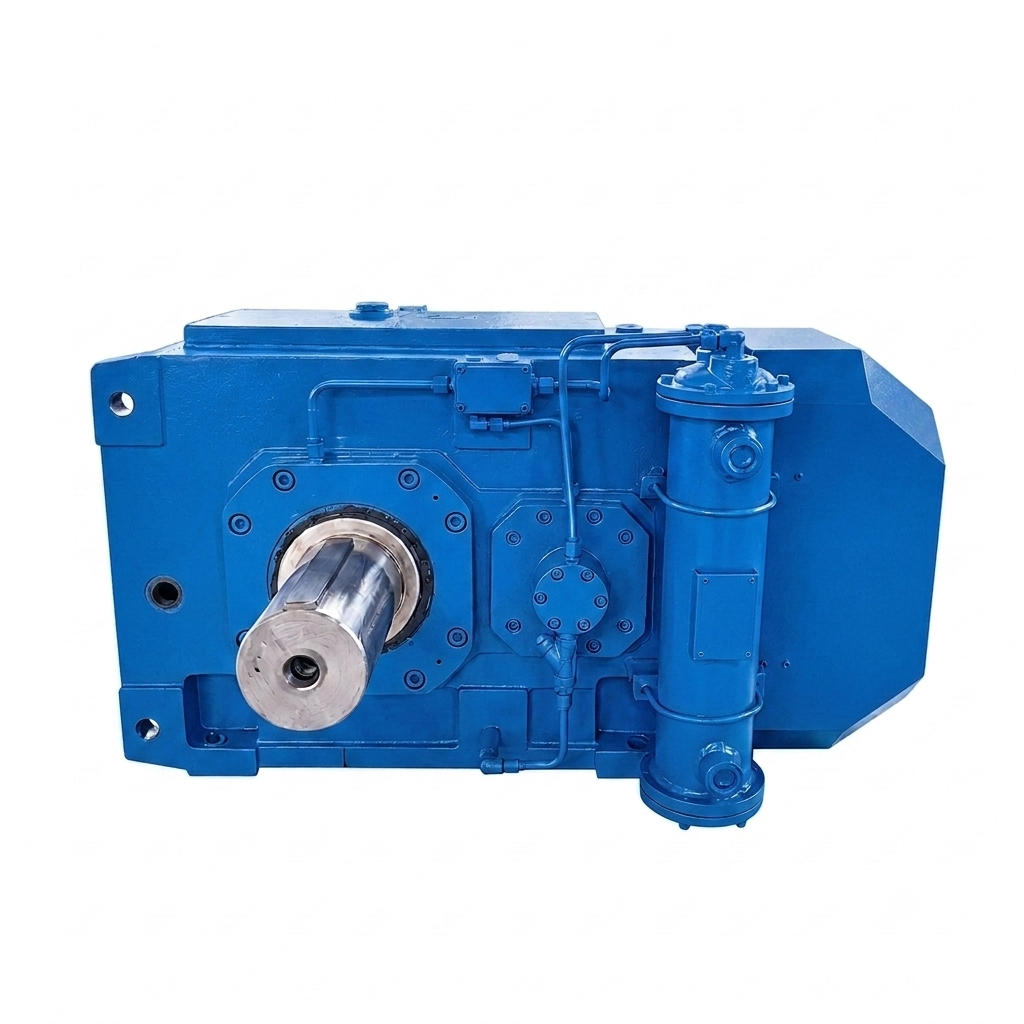
You need a drive system engineered specifically for the brutal realities of the site. Specifying a purpose-built Parallel Shaft Gearbox for Mining Conveyor applications mitigates mechanical failure. These robust units handle massive starting torques, absorb heavy shock loads, and optimize drive system reliability across your operation. This guide breaks down the engineering rationale behind these heavy-duty systems. We cover thermal ratings, failure prevention, and the exact drive configurations required to keep your belts moving and production on schedule.
Design Efficiency: The parallel shaft helical gearbox offers a superior balance of high torque density and mechanical efficiency, making it optimal for space-constrained mining conveyors.
Evaluation Metrics: Proper sizing requires evaluating thermal ratings, peak starting torques, and AGMA service factors, rather than relying solely on continuous horsepower requirements.
Failure Prevention: Premature conveyor drive failures frequently stem from misjudged torque, ratio, or overhung load needs—making precise application engineering critical.
Risk Mitigation: Long-term reliability in mining environments depends heavily on specialized sealing technologies (e.g., taconite seals) and rigorous lubrication protocols.
Vendor Selection: Partnering with a specialized industrial gearbox manufacturer is critical for application-specific engineering, condition monitoring integration, and reliable aftermarket support.
The Operational Demands of a Mining Conveyor Drive
Defining Success Criteria
Mining equipment operates within a harsh, interconnected ecosystem. Crushers feed the belt, and the belt feeds the screens. If the mining conveyor drive trips, the crusher backs up instantly. Success means continuous, uninterrupted operation. Minimal maintenance interventions are non-negotiable. High Mean Time Between Failures (MTBF) defines the success of the installation. You cannot afford frequent belt stops to replace sheared pins or blown seals. The drive must operate reliably for years, requiring only scheduled fluid changes and basic condition monitoring. Every component must be over-engineered to handle the worst-case scenario.
Overcoming High Starting Torques and Shock Loads
Starting a fully loaded inclined conveyor demands massive breakaway force. The physics involve overcoming static friction across thousands of feet of heavy rubber belting and idlers. Consider a cold start: a fully loaded inclined belt sitting overnight in freezing rain. The static friction is immense. The motor pulls locked-rotor amps, and the gearbox takes the full brunt of that shock. Standard reducers often shear their input shafts under this immense pressure. Purpose-built gearboxes absorb these spikes by distributing the load across wide, case-hardened gear faces designed specifically for heavy shock applications.
Environmental Hazards
Mines and quarries destroy precision machinery. Fine, abrasive silica dust coats every exposed surface and works its way into rotating components. Moisture from weather exposure or high-pressure washdowns easily penetrates weak sealing arrangements. Extreme temperature fluctuations alter oil viscosity, thinning it out during hot afternoons and thickening it into sludge during freezing nights. These hazards destroy internal gearing rapidly. Contaminated lubrication accelerates bearing wear, leading to catastrophic failure. Drive systems must feature robust, multi-layered defenses to survive these conditions.
Space Constraints
Conveyor head pulleys often sit in cramped, elevated spaces. Narrow catwalks restrict movement for maintenance personnel. Access for cranes or lifting equipment is severely limited. Drive solutions must remain highly compact. They cannot obstruct walkways, safety barriers, or access panels. A narrow physical profile ensures safe visual inspections and easier component replacements. When space is at a premium, bulky drive configurations become a severe safety and maintenance liability. Maintenance teams need clear access to oil drain plugs, breathers, and inspection covers without hanging over open ledges.
Why Specify a High Torque Parallel Shaft Gearbox?
Mechanical Efficiency
Power transmission efficiency matters deeply when operating large motors continuously. A parallel shaft helical gearbox typically achieves 95% to 98% mechanical efficiency per stage. This significantly outperforms traditional worm gear reducers, which lose substantial power to sliding friction and heat generation. High mechanical efficiency translates directly to lower electrical energy consumption. Over a year of 24/7 operation, the energy savings from utilizing highly efficient helical gearing are substantial, directly improving site profitability. Less wasted energy also means less internal heat generation, which protects the oil.
Comparison of Gearbox Efficiencies in Conveyor Applications
Gearbox Type
Average Efficiency (Per Stage)
Heat Generation
Suitability for High Torque
Parallel Shaft Helical
95% - 98%
Low
Excellent
Bevel-Helical (Right Angle)
94% - 97%
Moderate
Very Good
Worm Gear
50% - 85%
High
Poor
Planetary
96% - 98%
Moderate to High
Excellent
Torque Density in a Compact Profile
Bulk material sites require maximum power transmission in minimal physical space. The parallel shaft arrangement excels in this specific requirement. It allows engineers to stack multiple gear stages inside a narrow, rigid cast-iron housing. The drive runs parallel to the conveyor structure itself. This alignment saves valuable width along the catwalk. You secure a high torque parallel shaft gearbox without sacrificing the footprint required for safe personnel movement and routine maintenance tasks. The inline nature of the shafts allows for a very stiff housing design, which prevents gear deflection under heavy loads.
Quiet Operation and Precision Gearing
Excessive noise in a drive system indicates mechanical stress and poor gear meshing. High-quality parallel shaft designs operate quietly. They utilize precision-ground gear teeth with modified profiles to reduce Noise, Vibration, and Harshness (NVH). Lower NVH proves the gearing is precise and that the load is distributed evenly across the gear teeth. Precision manufacturing reduces internal friction and wear, extending the operational lifespan of the entire drive unit and protecting the motor from harsh vibrations. Smooth gear meshing prevents micro-pitting on the gear teeth surfaces.
Mounting Flexibility and Shaft-Mounted Dominance
Traditional foot-mounted setups require massive steel baseplates. They demand complex flexible couplings and time-consuming laser alignment procedures. Heavy-duty shaft-mounted configurations eliminate these headaches entirely. The reducer mounts directly onto the driven head pulley shaft. Mining and cement plants trust shaft-mounted designs because they eliminate complex alignment procedures, save significant installation time, and easily accommodate minor shaft deflections.
The installation process for a shaft-mounted unit is straightforward and minimizes field errors:
Clean and inspect the driven head pulley shaft for burrs or damage.
Apply anti-seize compound to the driven shaft to prevent fretting corrosion.
Hoist the gearbox into position and slide the hollow bore over the driven shaft.
Engage the shrink disc or tighten the tapered bushing to the manufacturer's specified torque.
Install and adjust the torque arm to secure the housing and prevent rotation.
Technical Evaluation Criteria for a Heavy Duty Speed Reducer
Sizing and Service Factors
Applying the correct service factor is the most important step in gearbox specification. The American Gear Manufacturers Association (AGMA) provides strict guidelines for heavy industry. Mining conveyors typically require service factors ranging from 1.5 to 2.0 or higher, depending heavily on the duty cycle and material load. Sizing a drive based solely on the motor's continuous horsepower leads directly to mechanical failure. You must account for peak starting loads, intermittent shock forces, and the reality of 24/7 continuous operation. A higher service factor physically translates to wider gear faces and larger bearings.
Single vs. Multiple Reduction Stages
Conveyor belt speeds dictate the required gear reduction ratio. You must choose between single reduction and multi-stage helical gearboxes carefully. Misapplying a single-stage unit for high-ratio demands causes severe stress on the pinion gear. Multi-stage units handle larger speed reductions smoothly and efficiently. They distribute the mechanical load across multiple gear sets, ensuring no single gear tooth bears the brunt of the torque multiplication required to drive a heavily loaded belt. Multi-stage designs allow the motor to run at its optimal base speed while delivering massive torque at the output shaft.
Thermal Capacity vs. Mechanical Rating
Mechanical rating measures the raw torque a gearbox can transmit before breaking. Thermal capacity measures its ability to dissipate internal heat into the surrounding air. These are completely different metrics. A heavy duty speed reducer might easily handle a load mechanically but overheat rapidly in a hot climate. Excess heat degrades oil viscosity, leading to metal-on-metal contact. You must verify both ratings. If thermal capacity is insufficient, you must specify auxiliary cooling fans, external heat exchangers, or high-grade synthetic lubricants to manage the thermal load.
Bearing Selection and L10 Life Expectancy
Bearings bear the brunt of overhung loads and heavy belt tension. Heavy-duty spherical roller bearings are mandatory in these applications. They handle severe radial and axial forces simultaneously without failing. Engineers calculate bearing durability using L10 life expectancy, which predicts the lifespan of the bearing under specific loads. Continuous mining operations demand exceptionally high L10 ratings, often exceeding 50,000 hours. Undersized bearings will collapse under the immense tension of a loaded conveyor belt, causing the shafts to misalign and destroying the internal gear mesh.
Contamination Defense
Standard lip seals fail rapidly in abrasive environments. Silica dust and iron ore particles destroy them in weeks, grooving the shafts and allowing oil to escape. Labyrinth and taconite seals are mandatory for survival. They create a complex physical barrier against dirt and moisture. These sealing systems feature purgeable grease cavities that actively block contaminants from reaching the internal oil reservoir. Proper sealing extends gearbox life exponentially by keeping the lubrication pristine. Maintenance teams must regularly purge these seals with fresh grease to push out accumulated dust.
Comparing Gearbox Topologies: Trade-offs and Alternatives
Parallel Shaft vs. Right-Angle (Bevel-Helical) Gearboxes
Right-angle gearboxes save width along the side of the conveyor, allowing the motor to sit parallel to the belt. They introduce bevel gear complexities. Bevel gears are highly sensitive to alignment, generate more axial thrust, and are generally more expensive to manufacture and repair. Parallel shaft units are narrower in profile but extend further alongside the structure. They offer simpler internal maintenance, fewer thrust load issues, and slightly higher mechanical efficiency due to the absence of bevel gear sliding friction. Rebuilding a parallel shaft unit in the field requires less specialized tooling than setting the backlash on a bevel gear set.
Parallel Shaft vs. Planetary Gearboxes
Planetary drives offer immense torque density in a highly compact, inline profile. They are excellent for mobile equipment like excavators or apron feeders. They are mechanically complex and expensive to repair in the field. Parallel shaft designs offer much simpler maintenance procedures. They cost less upfront and provide superior thermal dissipation. Their larger surface area naturally sheds heat better than compact planetary housings, making them ideal for continuous, high-load conveyor applications where thermal management is a primary concern. You can easily inspect the gear mesh on a parallel shaft unit by removing a top cover, which is impossible on a planetary drive.
Implementation Risks and Maintenance Realities
Common Sizing Pitfalls
Misjudging torque is a fatal error in drive specification. Specifying the wrong gear ratio, underestimating overhung loads, or ignoring cold-weather starting friction leads to disaster. These mistakes are the leading cause of catastrophic gearbox failure on bulk material conveyors. A drive sized for steady-state running will shear its input shaft during a cold, fully loaded startup. Thorough application engineering, including a complete review of the conveyor's load profile, prevents these costly sizing pitfalls. You must calculate the exact breakaway torque required to move the belt from a dead stop under full load.
Mitigating Misalignment and Vibration
Improper installation destroys bearings and gears rapidly. Foot-mounted setups are highly vulnerable to alignment errors between the motor, gearbox, and head pulley. Shifting steel foundations and thermal growth exacerbate this issue. Shaft-mounted parallel shaft gearboxes inherently reduce these alignment risks. They float with the driven shaft. This configuration absorbs minor structural deflections and shaft runout without transferring damaging stress to the internal gear mesh or bearings. The torque arm acts as a shock absorber, dampening sudden load spikes before they reach the motor.
Lubrication Strategies for Remote Sites
Maintaining proper oil levels at remote, dusty sites is notoriously difficult. Extreme ambient temperatures demand high-quality synthetic lubricants for stability. Synthetic oils resist thermal breakdown under high heat and maintain fluidity during freezing startups. Automated lubrication systems ensure consistent grease delivery to taconite seals. They remove the reliance on manual maintenance schedules, ensuring the physical grease barrier remains intact even when maintenance crews are stretched thin. Desiccant breathers must be installed to strip moisture from the air before it enters the gearbox housing during thermal cycling.
Condition Monitoring Integration
Future-proofing your drive system minimizes unplanned downtime. Specify machined ports for vibration sensors during the initial ordering process. Install oil debris monitors to catch microscopic gear wear early. Use Resistance Temperature Detectors (RTDs) to track thermal spikes in the oil bath. Condition monitoring allows maintenance teams to schedule repairs during planned outages, long before a minor bearing defect escalates into a catastrophic, line-stopping breakdown. Routine oil sampling provides a clear window into the health of the internal components, allowing you to track iron and copper particulate levels over time.
Selecting an Industrial Gearbox Manufacturer for Mining Applications
Engineering Support and Customization
Off-the-shelf commercial solutions rarely fit complex mining needs. You require custom gear ratios, specific mounting geometries, and specialized output shafts. Thermal cooling accessories like shaft-driven fans or external heat exchangers are often necessary. Partnering with a specialized industrial gearbox manufacturer ensures you receive application-specific engineering. They analyze your specific site conditions, ambient temperatures, and load profiles to tailor the drive exactly to your operational requirements. They will verify your overhung load calculations and recommend the exact bearing upgrades needed for your specific belt tension.
Supply Chain and Lifecycle Support
Evaluate vendors based on their ability to support the equipment over its entire lifecycle. Lead times for replacement units and critical spare parts must be short. Fast access to replacement gears, bearings, and seal kits minimizes production downtime. Localized service capabilities and responsive technical support are crucial for rapid field repairs. A reliable supply chain ensures your conveyor stays operational year-round, protecting your production targets from unnecessary delays. You need a partner who stocks exact-match replacement components and can dispatch field service technicians immediately when a breakdown occurs.
Conclusion
Take immediate action to secure your bulk material handling infrastructure and eliminate unplanned conveyor downtime.
Audit your existing conveyor drives to identify undersized units operating below a 1.5 AGMA service factor.
Install vibration sensors and RTDs on all primary overland conveyor gearboxes to establish baseline condition monitoring data.
Upgrade standard lip seals to taconite or labyrinth seals on any drive exposed to heavy silica dust or washdown zones.
Standardize your lubrication protocol by switching to high-grade synthetic oils to improve thermal dissipation and cold-weather startup performance.
FAQ
Q: What is the typical service factor for a mining conveyor gearbox?
A: Mining conveyors typically require an AGMA service factor between 1.5 and 2.0. This elevated rating accounts for heavy shock loads, continuous duty cycles, and the massive starting torque required to move raw materials. Always consult an application engineer to determine the exact factor for your specific site conditions.
Q: How does a parallel shaft helical gearbox improve conveyor efficiency?
A: Parallel shaft helical gearboxes utilize precision-cut gears that mesh smoothly, minimizing sliding friction. This design routinely achieves 95% to 98% mechanical efficiency per stage. Higher efficiency means less power is wasted as heat, directly reducing electrical consumption and lowering the operational costs of the conveyor system.
Q: What are the advantages of a shaft-mounted gearbox on a bulk material conveyor?
A: Shaft-mounted gearboxes eliminate the need for heavy baseplates, flexible couplings, and complex laser alignment procedures. The reducer mounts directly onto the conveyor's head pulley shaft. This configuration saves installation time, reduces footprint, and inherently mitigates alignment errors that cause premature bearing failure.
Q: When should I choose a single reduction vs. multi-stage helical gearbox for a conveyor?
A: Choose a single reduction gearbox for high-speed, low-ratio applications. Multi-stage helical gearboxes are required when significant speed reduction and high torque multiplication are necessary. Misapplying a single-stage unit for a high-ratio demand places excessive stress on the gears, leading to rapid mechanical failure.
Q: What causes premature failure in a heavy duty speed reducer?
A: Premature failure usually stems from misjudged torque requirements, inadequate thermal ratings, or improper service factors. Environmental factors also play a major role. Abrasive dust and moisture can bypass weak seals, contaminating the oil and destroying bearings and gear teeth rapidly.
Q: How do you calculate the required starting torque for a mining conveyor drive?
A: Calculating starting torque requires analyzing the static friction of the entire belt, the incline angle, and the total mass of the fully loaded raw material. Engineers must also account for cold-weather starts, which increase belt stiffness and oil viscosity, demanding significantly higher breakaway torque.
Q: What type of gearbox seals are best for dusty mining environments?
A: Taconite and labyrinth seals are the best defense against dusty mining environments. Unlike standard lip seals, they create a robust physical barrier. They feature purgeable grease cavities that actively block abrasive particles and moisture from penetrating the gearbox housing and contaminating the lubricant.