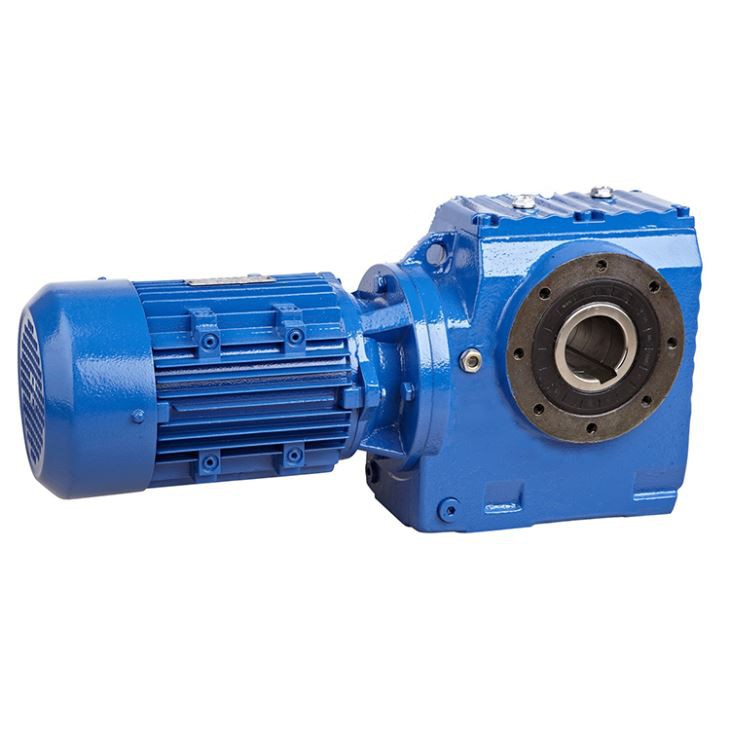
Facility engineers face a constant battle in modern industrial design. They must maximize material throughput to meet aggressive production targets. At the same time, they must strictly limit the physical footprint of their conveyor systems. This creates a highly complex engineering conflict. Standard inline drives often create significant spatial bottlenecks in warehouses. These bulky units protrude directly into pedestrian aisles. They disrupt tight material handling layouts and consume incredibly valuable floor space.
A worm gearmotor provides a highly engineered, reliable solution. It solves these exact challenges for space-constrained and cost-sensitive conveyor applications. The perpendicular design fundamentally alters how we construct machinery layouts. We will objectively evaluate the operational, spatial, and financial trade-offs of choosing this drive type over alternative configurations. You will learn how to optimize your floor plans, reduce upfront procurement expenses, and safely specify the correct equipment for your facility needs.
Key Takeaways
Spatial Optimization: Right-angle shaft orientations allow motors to sit parallel to the conveyor frame, drastically reducing aisle protrusion.
Cost Efficiency: Worm drives offer higher reduction ratios in fewer stages, lowering upfront procurement costs compared to multi-stage helical alternatives.
Inherent Load Holding: High-ratio self-locking capabilities often eliminate the need for secondary mechanical braking systems on inclined conveyors.
Specification Realities: Proper sizing requires evaluating thermal thresholds and acknowledging the efficiency trade-offs inherent to sliding friction gear mechanics.
The Business Case for the Right Angle Gearmotor in Material Handling
Bulky inline drives hide many operational costs within a facility. They require artificially widened aisles simply to allow maintenance access. They also present distinct physical safety hazards on the floor. Forklifts and workers easily bump into protruding motors, risking equipment damage. Multi-tier conveyor integrations become highly compromised by traditional inline setups. You cannot stack sorting lines tightly together if long motors block the required vertical clearance. Every wasted cubic inch ultimately reduces overall warehouse efficiency.
Altering the power transmission plane changes everything. A right angle gearmotor turns the output axis by exactly 90 degrees. This fundamental mechanical shift completely modifies the physical envelope of the drive unit. The machinery no longer sticks out into traffic zones. It aligns perfectly alongside the belt structure. You reclaim critical aisle space instantly without sacrificing mechanical output.
We must define what makes a conveyor drive upgrade genuinely successful. Engineers cannot simply purchase smaller motors and hope for the best. They must meet highly specific operational metrics to ensure success.
Torque Maintenance: The newly specified drive must match or safely exceed previous load requirements.
Geometric Envelope: The entire unit must fit completely inside heavily restricted machinery guards.
Budget Compliance: The transition cannot exceed clearly defined departmental capital expenditure limits.
Meeting these strict criteria requires careful equipment selection. It demands a delicate balance between form factor and mechanical power. You achieve this vital balance directly through targeted right-angle transmission designs.
How a Compact Worm Reducer Minimizes Conveyor Footprint
The parallel mounting architecture offers incredible layout flexibility for designers. The perpendicular shaft arrangement changes the installation profile completely. You can position the heavy motor body parallel to the conveyor chassis. You can even tuck it completely beneath the moving belt frame using a hollow shaft configuration. This specific design prevents hazardous motors from blocking active pedestrian walkways.
A compact worm reducer often eliminates secondary transmission components entirely. High single-stage reduction ratios easily reach up to 100:1. You do not need to install bulky external pulleys to step down the speed. You can discard complex V-belt systems. You can remove messy external chains. Fewer external parts mean a much smaller operational footprint overall.
Consider these distinct architectural benefits during your next installation phase:
Streamlined side profiles allow closer parallel positioning of adjacent conveyor lines.
Removed external belts drastically reduce the required volume for safety guarding.
Under-belt mounting effectively protects the motor casing from falling overhead debris.
Hollow shaft mounts eliminate the need for heavy external coupling flanges.
Implementation reality requires careful environmental planning by your team. You save massive amounts of physical space using this geometry. However, engineers must account for adequate ventilation around the gearbox. The compact casing concentrates heat dissipation inside a very small area. Enclosing the drive completely behind solid steel panels will cause rapid overheating. You must ensure open airflow around the external cooling fins constantly. Space optimization should never compromise thermal regulation. Proper clearance actively prevents premature mechanical failure.
Self-Locking Gearmotor Capabilities: Safety and Speed Regulation
The core physics of self-locking provides highly unique mechanical advantages. A steep friction angle exists between the hardened steel worm shaft and the bronze wheel. This steep angle creates significant back-driving resistance during operation. Power flows easily from the spinning motor to the heavy load. However, the external load struggles to drive power back into the motor. This one-way power transmission creates natural, inherent braking forces.
These inherent load-holding traits lead to major hardware cost reductions. Lightweight inclined conveyors benefit heavily from this phenomenon. Indexing belts also see immediate advantages during rapid stop-and-go cycles. The static gear resistance often negates the need for expensive external electromechanical brakes. You save money directly on external braking hardware. You also simplify your control panel wiring circuits significantly.
A self-locking gearmotor is a powerful tool for cost reduction. However, we must provide an expert caveat regarding safety. Self-locking heavily depends on system vibration and gear wear over time. You should never treat it as an absolute fail-safe substitute. Safety-critical holding brakes remain strictly mandatory for heavy-duty incline applications. Human-safety elevators strictly require dedicated, independent mechanical brakes to prevent disaster.
We can observe excellent speed regulation dynamics in these units. A typical setup achieves low-speed, high-torque outputs flawlessly. This makes the drives ideal for precise sorting lines in fulfillment centers. Packaging conveyors also rely on this smooth low-speed capability. They must handle extremely delicate products safely without sudden jerks.
Common Braking Scenarios and Suitable Drive Types
Application Type
Load Condition
Suitable Braking Solution
Light Indexing Conveyor
Horizontal, Low Inertia
Inherent static self-locking
Steep Incline Sorter
High Gravity Load, Vibration
Motor brake + self-locking
Overhead Human Safety
Critical Fall Risk
Independent fail-safe mechanical brake
Cost Analysis: Worm Gear Motor vs. Helical Drives
Upfront capital expenditure strongly drives many engineering procurement decisions. Worm drives generally cost less to manufacture than helical bevel equivalents. They contain far fewer moving mechanical parts overall. They achieve immense reduction ratios using just one single gear stage. A multi-stage helical unit requires several internal gear sets to reach identical low speeds. More machined gears increase manufacturing costs significantly. A worm gear motor bypasses this assembly complexity entirely.
We must address the long-term operational efficiency tax caused by sliding friction. Helical gears use highly efficient rolling friction mechanics. They remain exceptionally efficient, routinely exceeding 95 percent transfer rates. Conversely, worm gears rely heavily on sliding friction. They lose measurable efficiency, especially at higher reduction ratios. A high-ratio unit turns more input electrical energy into ambient heat. This heat represents lost, unrecoverable electrical power.
You must evaluate these long-term operational expenses carefully. Do not ignore your monthly facility energy bills. We provide a straightforward decision framework for your engineering team.
Worm drives clearly win on return on investment for intermittent duty cycles. They absolutely dominate low horsepower conveyor applications. They fit extremely tight facility budgets perfectly. The inherent energy loss matters very little if the motor only runs occasionally.
Helical units win for continuous, heavy-duty operations. They suit 24/7 sorting facilities best. The ongoing electricity costs eventually outweigh the initial procurement savings. You must carefully choose your technology based on actual, measured daily run times.
Efficiency and Cost Comparison Chart
Evaluation Feature
Worm Drive Solution
Helical Bevel Drive Solution
Initial Procurement Cost
Low to Moderate
High
Energy Efficiency Rating
50% - 85% (Ratio Dependent)
95%+ (Highly Consistent)
Installation Space Required
Extremely Compact Profile
Moderate to Large Envelope
Ideal Operational Duty Cycle
Intermittent / Light Duty
Continuous 24/7 Operations
Essential Evaluation Criteria for Specifying a Conveyor Worm Drive
Calculating actual service factors proactively prevents disastrous field failures. You cannot size equipment based solely on smooth, steady running loads. You must heavily adjust your baseline sizing based on start and stop frequencies. Sudden shock loads demand much higher safety margins. Ambient operating temperatures affect overall performance heavily. Hot facility environments strictly require derating the maximum allowable load to prevent failure.
Emphasize the critical difference between thermal ratings and mechanical ratings. The specific thermal capacity of a conveyor worm drive is often the ultimate limiting factor. The gearbox casing will overheat long before the internal gears actually break. Selecting proper synthetic lubricants is absolutely non-negotiable. Premium synthetic oils handle high internal temperatures substantially better than mineral oils. They reduce damaging sliding friction effectively.
Warn your procurement and maintenance teams about the mandatory break-in period. Bronze wheels strictly require a distinct run-in phase. They must microscopically conform against the harder steel shaft to reach peak efficiency. The gearbox will run noticeably hotter during its first few weeks of operation. Educate your maintenance staff early to prevent premature panic over initial temperature spikes.
Follow strict vendor shortlisting logic during procurement. Look for specific, value-added supplier capabilities.
Demand modular flange options for flexible future motor mounting.
Ensure essential replacement components remain readily available locally.
Request completely transparent, published thermal data sheets before purchasing.
Check for factory-filled synthetic lubrication options to reduce setup time.
A highly reliable supplier actively prevents extended facility downtime. Do not buy industrial equipment based on the lowest price alone.
Conclusion
Worm drives uniquely solve very specific spatial constraints brilliantly. They keep upfront budgetary costs low while maintaining excellent torque delivery. They provide immense strategic value in modern automated conveyor engineering. Their sleek perpendicular layout genuinely saves critical warehouse space.
The best technical decision always balances competing facility factors. You must thoughtfully weigh the compact physical profile against your actual operational duty cycle. You must closely compare lower initial hardware costs against long-term operational energy requirements. A blind purchase often leads directly to system overheating or wasted electrical power.
Audit your current conveyor system layouts today. Look for distinct dead space caused by bulky, protruding inline motors. Request a detailed dimensional footprint comparison from your drive distributor. You might discover immediate opportunities to optimize your busy facility floor plan safely and efficiently.
FAQ
Q: Why are worm gearmotors less efficient than helical gearmotors?
A: The core difference lies completely in the internal friction mechanics. A worm shaft relies on heavy sliding friction against a bronze wheel to transmit power. This constant sliding motion generates significant heat, leading to energy loss. Helical gears use highly efficient rolling friction. Rolling contacts transfer mechanical energy much more efficiently, consistently maintaining higher overall power transmission rates.
Q: Can a self-locking worm gearmotor completely replace a mechanical brake?
A: No. You cannot safely rely on static friction as a permanent fail-safe. System vibration, internal gear wear over time, and efficiency improvements from synthetic oils can cause a static gear to back-drive unexpectedly. Safety-critical setups and steep inclines always require dedicated external mechanical brakes to prevent dangerous load drops.
Q: What is the standard lifespan of a worm gear motor on a conveyor?
A: Lifespan varies heavily based directly on your application. It depends completely on the system duty cycle, strict adherence to thermal limits, and proper lubrication schedules. A well-maintained industrial unit typically runs reliably between 10,000 and 25,000 operating hours. Neglecting oil changes or ignoring thermal limits will drastically shorten this timeframe.
Q: Are right-angle worm drives suitable for variable frequency drives (VFDs)?
A: Yes, they integrate very well with VFD control panels. However, you must exercise extreme caution at continuous low speeds. A standard motor cooling fan becomes highly ineffective when spinning slowly. Worm gearboxes naturally generate extra heat due to sliding friction. Extended low-speed operation without independent external cooling can quickly cause severe overheating issues.