In industrial applications, power transmission relies heavily on the precise calculation of torque in a gearbox system. Torque, the force that causes an object to rotate, is fundamental for understanding how machines perform under various loads. For applications demanding high efficiency and precision, such as in robotics, automation, and CNC machining, understanding how to calculate torque is crucial for selecting the right gear system. High torque gearboxes play a pivotal role in ensuring reliable performance, as they are designed to deliver greater power transmission in compact, space-efficient units. In this article, we will break down the key concepts and calculations involved in determining torque in motor gearbox systems, focusing on the specific advantages offered by high torque gearboxes in achieving precision and durability.
What Is Torque in a Motor and Gearbox Context?
Motor Output vs Gearbox Output
Torque is essentially a measure of the rotational force applied to an object. In motor systems, torque is a direct function of the motor's ability to turn a shaft, and it’s often specified in Newton-meters (N·m). The motor's torque output is critical, but when integrated into a gearbox, the output torque can either be increased or decreased, depending on the gear ratio.
In a gearbox system, torque is modified by the gear ratio. The gearbox output torque depends on the motor's torque and the gearing configuration, which either amplifies or reduces the torque output. For example, in high torque gearboxes, the gear ratio is often designed to magnify the torque output while maintaining operational efficiency, especially for demanding applications like automation or robotic arms where precision and high load handling are required.
Why Torque Calculation Matters in Industrial Systems
Understanding how to calculate torque is critical for determining how a system handles load, performs efficiently, and ensures minimal thermal impact. In high torque gearboxes, torque calculation directly impacts the gearbox's ability to transfer power, maintain operational temperatures, and manage energy consumption. Proper torque handling allows for:
Enhanced Load Handling: Proper torque ensures that the gearbox can handle the required loads without failure or unnecessary wear.
Improved Efficiency: Torque calculation impacts the energy efficiency of the system, minimizing losses during operation.
Better Thermal Management: High torque gearboxes are designed to handle large forces without overheating, crucial for systems requiring continuous operation under heavy loads.
Precise Sizing: Accurate torque calculation ensures that the gearbox is neither oversized nor undersized for the application, optimizing performance.
The Fundamental Formula for Torque Calculation
Basic Torque Equation
The most fundamental equation for calculating torque in a gearbox system is:
Output Torque = Input Torque × Gear Ratio × Efficiency
This formula highlights the relationship between the torque generated by the motor, the reduction or amplification achieved by the gearbox, and the efficiency of the entire system. The gear ratio dictates how much the motor’s torque will be multiplied or divided, while efficiency represents losses due to friction, heat, and mechanical inefficiencies within the gearbox. The higher the gear ratio in a high torque gearbox, the more the torque is multiplied, making it suitable for applications requiring high precision and heavy load handling.
Real-World Factors
In practice, the torque calculation is not always perfect due to mechanical losses. These losses occur due to friction between moving parts, lubrication resistance, and backlash in the gear system. A high torque gearbox minimizes these losses by using precision-ground helical gears and reinforced bearings, ensuring a high efficiency range (typically 96-98%). These components ensure that the gear system delivers maximum torque with minimal energy wastage, crucial for industries like robotics and CNC machining where precision is key.
Step-by-Step Torque Calculation Guide
Find Motor Rated Torque
The first step in calculating torque for a motor gearbox system is to determine the motor’s rated torque, which is typically specified in the motor's datasheet. For example, a motor with a rating of 1.3 N·m is designed to output that torque under standard conditions. The rated torque is important because it defines the power capacity of the motor before any gearing modifications are applied.
Determine Gear Ratio
Next, determine the gear ratio of the gearbox. The gear ratio specifies how much the input torque will be multiplied or divided by the gearbox. A common example is a 29:1 gear ratio, where the output torque is approximately 29 times the input torque. Gear ratios are a critical factor in selecting the right high torque gearbox because they influence the final torque delivered to the system and ensure the system can handle the required load.
Incorporate Gearbox Efficiency
The final step is to factor in the gearbox efficiency. A high-quality high torque gearbox typically offers an efficiency between 96% and 98%, meaning only 2-4% of the input energy is lost due to internal friction and other inefficiencies. High-efficiency gearboxes are vital in minimizing energy consumption and heat generation, especially in high-cycle, high-load environments where consistent performance is critical.
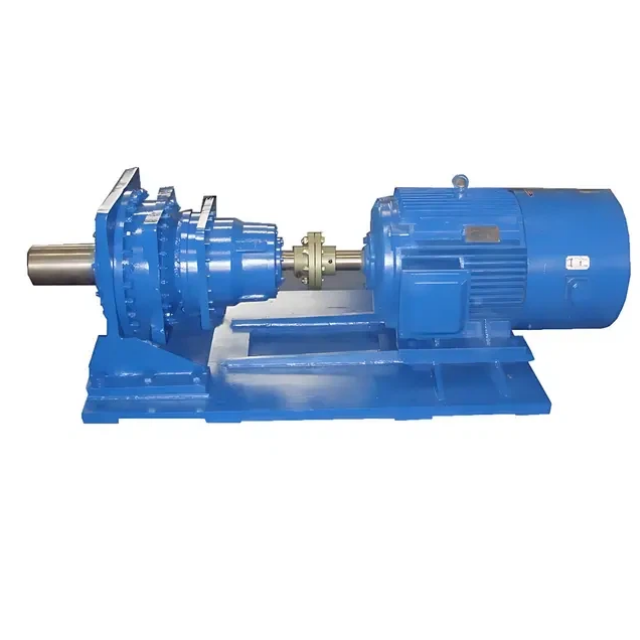
Case Study: Torque Calculation for a High Torque Gearbox
Let’s consider a real-world example of calculating torque for a high torque gearbox.
Step | Parameter | Value | Explanation |
1 | Motor Rated Torque | 1.3 N·m | From motor spec |
2 | Gear Ratio | 29:1 | Inline planetary stage |
3 | Efficiency | 0.75 | Real-life factor |
4 | Output Torque | ≈28.3 N·m | Final computed torque |
In this example, the motor’s rated torque of 1.3 N·m is multiplied by the gear ratio of 29:1, giving an output torque of approximately 28.3 N·m. The efficiency factor (0.75) accounts for losses within the system, which are typical in real-world applications.
This case study illustrates how a high torque gearbox can significantly increase the torque output from a relatively compact motor, which is especially useful for applications where space and weight are critical, yet high performance is required.
Why Inline Planetary Design Boosts Torque Performance
Inline planetary gearboxes are designed to distribute the load across multiple planet gears, increasing the torque capacity without compromising on size. This distribution minimizes stress concentrations and extends the gearbox's service life, making it ideal for industries such as automation and robotics, where high precision and reliability are paramount.
Helical vs Spur Gearing in Torque Delivery
In high torque applications, the gear type plays a significant role in determining the torque delivery efficiency. Helical gears are often preferred over spur gears in high torque applications due to their ability to transmit torque more smoothly and efficiently. The angled teeth in helical gears create less friction and allow for better load handling, which is essential in high torque gearboxes where performance under heavy loads is critical.
Backlash & Precision in High Torque Gearbox Systems
One of the most important features of high torque gearboxes is their ability to minimize backlash, which is the slight movement or “play” between gears. Low backlash is essential for maintaining precision, especially in applications like CNC machining and robotic arms, where even a small deviation can result in significant errors. By using case-hardened, precision-ground gears, high torque gearboxes ensure that the torque delivered is consistent and repeatable.
Practical Considerations for High Torque Gearbox Selection
Matching Torque to Application Needs
When selecting a high torque gearbox, it's essential to match the torque requirements of the application. Continuous torque is the amount of torque the system can handle under steady-state conditions, while peak torque accounts for short-term spikes in load. For applications with frequent acceleration and deceleration cycles, like conveyor belts or robotic arms, choosing a gearbox with a higher torque capacity is critical.
Role of Service Factor and Environmental Conditions
The service factor is a multiplier that accounts for the operational environment, such as shock loads, temperature fluctuations, and duty cycles. For example, a service factor of 1.4 is typically used for standard industrial applications, while more demanding applications may require a higher service factor. Understanding these factors is crucial for ensuring the high torque gearbox performs reliably in its intended environment.
Conclusion
In conclusion, understanding how torque is calculated in a motor gearbox system is essential for selecting the right high torque gearbox for your application. The proper calculation of torque ensures that the system can handle the required loads, operate efficiently, and maintain precision. When selecting a high-quality high torque gearbox, factors like gear ratio, efficiency, and application-specific needs should be carefully considered to ensure optimal performance. At Baffero, we offer a wide range of high torque gearboxes designed for demanding industrial applications, ensuring reliability, efficiency, and long-lasting performance. Contact us today to discuss your requirements and find the perfect solution for your power transmission needs.
FAQ
Q1: What is the efficiency range of high torque gearboxes?
A1: High torque gearboxes typically offer efficiency ratings between 96% and 98%, significantly reducing energy losses compared to other gear types.
Q2: How do I choose the right gear ratio for my application?
A2: The gear ratio depends on the required output torque and speed. A higher gear ratio increases torque but reduces speed, making it suitable for high-load applications.
Q3: What are the benefits of using inline planetary gearboxes?
A3: Inline planetary gearboxes distribute the load across multiple gears, providing higher torque capacity, better efficiency, and longer service life in compact designs.
Q4: Can high torque gearboxes handle extreme environmental conditions?
A4: Yes, high torque gearboxes are designed with reinforced housing and sealed bearings, making them suitable for harsh environments with dust, moisture, and temperature variations.


