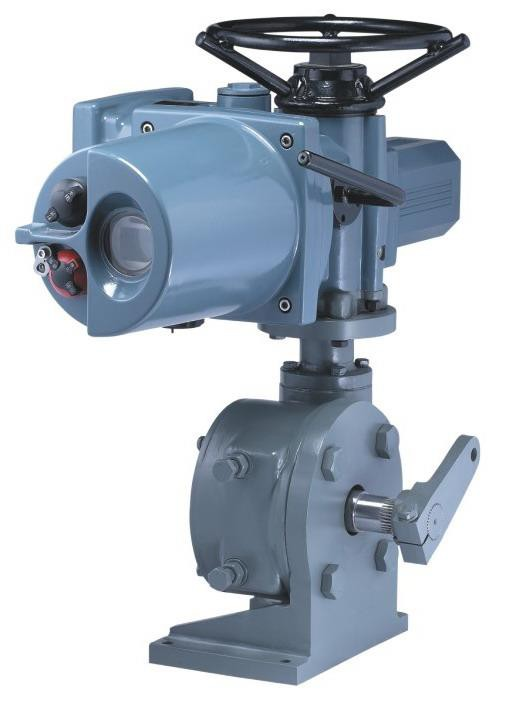
Industrial pipeline automation carries exceptionally high stakes in modern processing facilities. Incorrect specification of control hardware often leads to premature failure, hazardous leaks, or severe process bottlenecks. Engineers and procurement teams constantly face misaligned torque profiles or incompatible duty cycles when upgrading automated systems. Misunderstanding the direct mechanical link between the actuator mechanism and the valve stem frequently causes stripped gearing and blown motors. We present a strictly operational framework for selecting the correct industrial electric actuator for your specific facility needs. You will learn the definitive constraints separating multi-turn, part-turn, and linear requirements. This comprehensive guide ensures you establish foolproof mechanical alignment and long-term reliability for your critical pipeline infrastructure.
Key Takeaways
**Valve Mechanics Rule:** The choice between multi-turn and part-turn is entirely dictated by the valve’s stem motion (linear/multi-rotational vs. 90-degree rotary).
**Torque is Dynamic:** Accurate sizing requires calculating not just running torque, but maximum seating/unseating (breakout) torque.
**Control Intent Matters:** Modulating control requires specialized duty-cycle ratings compared to standard on/off isolation applications.
**Compliance is Non-Negotiable:** Environmental realities (ATEX, NEMA, IP ratings) dictate the actuator's housing and electronics more than baseline performance.
The Engineering Baseline: Why Valve Mechanics Dictate Actuator Choice
Misunderstanding the mechanical linkage between the control motor and the valve stem causes severe operational failures. When you mismatch these components, you risk stripped gearing, blown motors, or incomplete sealing. Process engineers often treat the electric valve actuator as a standalone preference. However, establishing a hard rule prevents systemic errors. You do not choose the device type based on brand loyalty or isolated features. You specify it based entirely on the physical stroke and thrust requirements of your pipeline's valves.
You must clearly define the split between different valve operations. Each mechanical design demands a specific driving force. Linear or rising stem designs, such as gate and globe valves, require multiple rotations to complete a full stroke. Conversely, rotary designs, including ball, butterfly, and plug valves, require a strictly defined partial rotation. This rotation usually spans exactly 90 degrees. Recognizing this mechanical divide forms the foundation of successful automation specification.
Valve Category
Common Valve Types
Motion Requirement
Actuator Alignment
Linear / Rising Stem
Gate, Globe, Pinch
Multiple 360° Rotations
Multi-Turn
Rotary / Quarter-Turn
Ball, Butterfly, Plug
Partial 0-90° Rotation
Part-Turn
Specifying Multi-Turn Valve Actuators: Capabilities and Constraints
These specialized units are designed to output continuous rotational torque. They serve valves requiring multiple 360-degree turns to move from a fully open to a fully closed state. A multi turn valve actuator primarily handles gate valves and globe valves. You will typically find these applications in high-pressure water networks, heavy steam lines, and massive oil pipelines. The continuous rotational force ensures the wedge or globe seats firmly against high media pressure.
When evaluating these systems, you must consider several critical dimensions. Failing to analyze these factors leads to rapid mechanical degradation.
Thrust Acceptance: The unit must handle the axial thrust generated by the valve stem. Operators often require dedicated thrust bases or heavy-duty bearings to absorb this physical load.
Torque vs. Speed: You must balance the RPM of the drive motor against the required closing time. Closing a gate valve too quickly generates destructive water hammer effects throughout the pipeline.
Limit and Torque Switches: Precise calibration remains absolutely mandatory. Over-torquing a gate valve can easily warp or completely crush the delicate valve seat.
Implementation risk remains high if engineers neglect proper commissioning. Facility managers must calibrate limit switches to halt the motor exactly at the end of the travel stroke. Relying solely on torque switches to stop the motor often stresses the mechanical linkages unnecessarily over time.
Specifying Part-Turn Actuators: Speed, Precision, and Breakout Torque
Engineers design these units for a highly limited range of motion. They typically travel from 0 to exactly 90 degrees. Industry professionals often refer to them as quarter-turn systems. A part turn actuator handles ball valves, butterfly valves, and plug valves. These designs excel at rapid pipeline isolation or specific flow diversion tasks. Their concise stroke allows for rapid opening and closing cycles during emergency shutdowns.
Specifying these units demands careful attention to initial resistance forces. Rotary valves present unique mechanical challenges compared to rising stem designs.
Breakout Torque Spikes: Rotary designs require significantly higher torque to break the initial seal. Unseating a ball valve takes far more energy than traveling through the middle of the stroke.
Gearbox Conversions: You can pair a multi-turn drive motor utilizing a quarter-turn worm gearbox. This creates a high-torque hybrid unit ideal for massive butterfly valves.
Implementation risks center entirely on media behavior. Failing to account for process media buildup drastically increases the required breakaway torque over time. Slurries, scaling, and crystallizing fluids create extreme friction inside the valve body. If you size the drive motor based only on clean water conditions, the unit will eventually stall when attempting to unseat a scaled butterfly disc.
Linear Valve Actuators and Modulating Control: Optimizing Process Flow
Modern process automation often moves beyond simple on/off isolation tasks. Facilities require precise flow regulation to optimize chemical mixing or manage steam pressure. A linear valve actuator provides direct thrust applications. Engineers typically mount these units onto globe or diaphragm control valves. Internal thread mechanisms seamlessly convert the rotary motor motion into strict linear force. This pushes the valve stem down into the flow path in highly controlled increments.
When selecting a modulating valve actuator, the specification parameters shift dramatically. Isolation duties allow for prolonged motor rest, but modulation demands continuous mechanical engagement.
Duty Cycle Demands: Standard on/off systems typically carry a 25% duty cycle rating. Modulating units require continuous or near-continuous duty ratings. They often reach up to 100% duty capacity to constantly adjust valve position without risking motor burnout.
Positioning Precision: Modulating systems require advanced electronics. They integrate directly utilizing 4-20mA analog signals. Modern digital protocols like HART or Foundation Fieldbus allow for micro-adjustments and remote diagnostics.
Success criteria for modulating setups rely on stable loop control. The system must maintain zero deadband and eliminate hunting. Hunting occurs when the motor constantly overshoots and reverses to find the target position. Exact flow rates depend on internal positioners rapidly interpreting the control signal and translating it into immediate physical thrust.
Core Evaluation Framework: Specs, Environments, and Compliance
Reliable automation requires a strict core evaluation framework. Best practice dictates applying a 20% to 30% safety factor over the valve’s maximum published torque rating. However, you must carefully avoid excessive over-sizing. Massively oversized drive units add unnecessary weight to the pipeline. They also introduce the severe risk of shearing valve stems during an obstruction event. The safety margin must accommodate media friction and aging seals without overpowering the mechanical limits of the hardware.
Environmental and hazardous certifications dictate the physical housing of the unit. Submersion risks require evaluating IP67 or IP68 ratings for strict ingress protection. Volatile chemical or petrochemical environments mandate ATEX or IECEx explosion-proof housings. These robust enclosures contain internal sparks, preventing them from igniting explosive atmospheric gases.
Environmental Threat
Required Certification Standard
Protection Mechanism
Heavy Dust / Temporary Submersion
IP67 / NEMA 4X
Sealed O-rings, corrosion-resistant coating
Continuous Underwater Operation
IP68 / NEMA 6P
Double-sealed terminal compartments
Explosive Gases / Vapors
ATEX / IECEx / NEMA 7
Flame-proof enclosure, spark containment
You must also assess fail-safe mechanisms. In the event of a sudden power failure, certain pipeline sectors must default to a safe position. You can specify battery backup systems or mechanical spring-return modules to drive the stem closed during blackouts. Finally, relying solely on manufacturer "ideal condition" torque charts represents a major pitfall. Experienced engineers always adjust baseline numbers by calculating the actual pipeline pressure drop (ΔP) and the specific gravity of the media. Ignoring these real-world physics causes frequent field failures.
Implementation Realities and Shortlisting Next Steps
Executing an upgrade presents different challenges depending on the site status. Retrofitting automation into an existing brownfield facility requires strict dimensional awareness. You must match the exact ISO 5210 or ISO 5211 flange dimensions. If the bolt patterns fail to align, operators face expensive custom machining delays. Greenfield builds offer significantly more flexibility, allowing procurement teams to specify harmonized flange standards directly from the factory.
Establishing actionable next steps helps procurement teams avoid specification bottlenecks. Following a structured audit path ensures you gather all necessary engineering data before requesting vendor proposals.
Audit the existing valve specifications thoroughly. Document the exact valve type, the physical stem dimensions, and the maximum published torque or thrust requirements.
Define the exact control requirement. State clearly whether the loop requires simple on/off isolation or continuous 4-20mA modulating control.
Document all site environmental classifications. Detail the ambient temperature range, potential submersion depths, and required explosion-proof hazardous area ratings.
Request detailed vendor specification sheets. Ensure the manufacturer explicitly addresses your audited criteria, proving their hardware matches your exact pipeline physics.
Conclusion
Successful pipeline control remains an exercise in strict mechanical alignment. Specifying the wrong motor type or underestimating breakout resistance guarantees premature equipment failure. You must base your decisions on physical stroke length, unseating friction, and specific control intent. Actionable next steps include:
Prioritize exact torque matching over generalized safety margins to prevent stem shearing.
Ensure you specify high duty-cycle ratings when designing modulating control loops.
Verify precise ISO flange dimensions before finalizing any retrofitting orders.
Mandate ATEX or IP68 environmental compliance based on realistic site exposure rather than baseline performance features.
FAQ
Q: Can a multi-turn electric actuator be used on a quarter-turn valve?
A: Yes, but only if paired with a secondary quarter-turn gearbox (worm gear) to translate the continuous rotation into a 90-degree stroke and multiply the torque.
Q: What is the standard safety factor when sizing an industrial electric actuator?
A: Engineers typically apply a 20% to 30% safety margin above the valve's maximum published operating torque to account for media friction, aging seals, and pressure fluctuations.
Q: What is the difference between an on/off and a modulating valve actuator?
A: On/off actuators are designed to fully open or fully close and have limited duty cycles (motor rest time required). A modulating valve actuator is designed for continuous adjustments, featuring higher duty cycles (often 100%), specialized motors, and internal positioners to respond to variable control signals (e.g., 4-20mA).
Q: How do ISO standards impact electric valve actuator selection?
A: Standards like ISO 5210 (for multi-turn) and ISO 5211 (for part-turn) define the exact flange dimensions and drive types, ensuring that actuators and valves from different manufacturers can be safely and securely mated without custom machining.